

mailing list

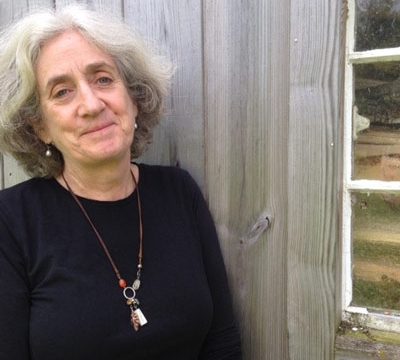
Jamilla Deria was appointed the Director of the University of Massachusetts at Amherst’s Fine Arts Center in 2019 and is the fourth person, and first woman to hold that position in the history of the college. Jamilla previously worked as a programmer at the Apollo Theater Foundation in NYC, where she enjoyed a successful career bringing live music, theatrical and family entertainment experiences to American audiences for nearly a decade. In previous roles, she promoted marquee properties such as the Radio City Christmas Spectacular, Blue Man Group and the Cirque du Soleil NY resident shows. Jamilla has also worked with Radio City Music Hall and The Beacon Theater, was the founder of the not-for profit theater company FeVA Productions Inc and is a producer for the Women of the World Festival, which presents performances, talks, mentoring sessions and debates that promote gender equality and celebrate the achievements of women and girls. These projects reflect Jamilla’s deep belief that the arts should be staged in service to the community. Deria earned her bachelor’s degree from Williams College and her master’s degree from New York University.
What’s your origin story, starting from where you were born to where you are now?
I grew up in Hartford, CT, a child of immigrants who arrived soon after Lyndon Johnson’s Immigration and the Nationality Act of 1965. My father, Mohammed, arrived from Burao in Somaliland and my mother Blanche came from the small village of Beterverwagting on the East Coast of Guyana, South America. Sadly their marriage was short-lived and resulted in my brother Adam and I spending our childhood moving between two distinct and ethnically specific households, each with its own distinctive clan, religion and culture. For all that, music was the through line of those early years. Whether it was my father humming along to Maryan Mursal on our regular Friday afternoon trips to his house, my uncle – the consummate party producer(!) – turning up the booming clarion calls of Mighty Sparrow at one of our many Guyanese throw-downs, or just sitting along the sidelines of the peewee soccer league while I was trying and failing to accurately recite all the lyrics of La Di Da Di, music gave me a sense of place as I moved between worlds.
I was fortunate enough to live in a community that had arts organizations like The Artists Collective, which offered low-cost, high-quality music and dance lessons. At age six, I begin taking piano and African dance. While I didn’t pursue either disciple, it planted a seed in me that continues to blossom.
Music colored my days but it was theater that brought me to life. I remember reading Ntozake Shange’s For Colored Girls sometime around 5th grade and being blown away. I loved that work so much that I distinctly remember one summer afternoon hanging out with my younger male cousins and brother and convincing them to perform the roles of Lady in Red, Green and Blue. I made them recite the monologues so many times that they eventually threw their book at me and rode away on their bikes.
My love of theater stayed with me through college and into my early adult life. Soon after graduation, I, and two dear friends started a non-profit theater company called FeVa Productions. We were recent theater graduates and, like so many, we wanted to see our experience reflected on the stage. Our mission was to break new voices and present new works by playwrights of color but it wasn’t long before we realized we needed dependable income to make it in NYC. My career as an arts administrator began soon after.
I’ve been lucky enough to work for iconic venues and brands like the Apollo Theater, Blue Man Group, the Radio City Christmas Spectacular and Cirque du Soleil. Today, I get to connect with a broad array of artistic forms through my role at the Fine Arts Center at the University of Massachusetts. With K-12 arts education budgets being slashed across the nation, I take the responsibility of my role very seriously. It is such a privilege to introduce and expose young people to a broad array of artforms. I know that many who sit in our audiences will not become artists themselves, but it’s my hope that this work inspires a different kind of curiosity in them about the world and even themselves.
UMass has a history of diversity in programming for their performing arts program, how do you try to live up to that legacy.
Collaboration is a big piece of our process. No one person or small group can or should speak for all people so, as a part of our season planning process, we regularly sought out diverse perspectives, both across campus and from within specific niche communities. Whether through advisory boards, listening sessions or guest curators, we start from a very receptive posture and the intention to be sensitive to issues that are affecting our community. We also want to do our best to import arts experiences missing from our local cultural ecosystem. It’s a bit of a puzzle: how can we present better and more completely? I like to think we’ve met the challenge this year but there’s always room to grow.
What are some of the still-to-come high points of UMass’ programming for this coming season?
We have a really wonderful season ahead. Given how isolated and siloed we have all been because of COVID, I am particularly happy that we have been able to include so many international companies in the season. Our Spring in particular takes our audiences around the globe through gorgeous sound.
Nobuntu is a female a cappella quintet from Zimbabwe that has drawn international acclaim for their inventive and exhilarating performances. Their music ranges from traditional Zimbabwean songs to Afro-jazz and gospel music. They feature traditional percussion instruments such as the Mbira (thumb piano) and organic dance movement in an embrace of music as a vehicle for change that transcends racial, tribal, gender, religious, and economic boundaries. They’re performing on February 8.
The seven-piece band Danú has been one of the leading traditional Irish ensembles since their debut album was released in 1997. In the past two decades since, Danú’s virtuosi players on flute, tin whistle, fiddle, button accordion, bouzouki, and vocals (Irish and English) have delighted audiences worldwide. The band will join us for an early celebration on the week of St. Patrick’s Day on March 11.
Small Island Big Song is a cross-cultural collaboration that reunites the distant yet interconnected musical traditions of indigenous people across the Pacific and Indian Oceans. The resulting work is a contemporary and relevant musical statement of a region on the frontline of cultural and environmental challenges. Musically, it’s exhilarating and shockingly modern. That happens on March 27.
“Balance” is elusive; something or someone always loses.
How do you balance being a new mother and an in-demand administrative figure in the arts?
“Balance” is elusive; something or someone always loses. Sometimes my focus has to be primarily on my family and other times, work fills my plate. Ironically, I may have come closest to something like balance in 2020. While I pray for the day that COVID-19 is just a bad memory, it would be disingenuous to say that I was not grateful for the extra time the pandemic provided for me to be with my son. I was so happy that I got to include him in the process of listening to different artists and engaging new projects. As we watched virtual programs, he was able to experience different cultures for the first time from the comfort of our kitchen table.
What advice would you offer creative people regarding making their practice profitable?
I met the photographer Adreinne Waheed only once and we chatted for no more than a few minutes, but her advice stays with me: the key to peace in this field is passive income. Use your reserve to acquire assets like real estate that can provide an income and if you don’t have a reserve, do what you can to create one. When you are your own patron, you set the terms on the type of art you create. Otherwise, you are forever beholden to whoever signs the check.
What does success look like for you?
Impact. I want to know that any program I create supports an artist’s next step on their path and that the work bridges and connects communities.
Can you provide a few recent recommendations of creative work that has resonated with you?
Being productive during the pandemic – or really any major moment of uncertainty – is no easy task. COVID-19 not only upended our field, it shook our lives and sense of safety. It will take many years to heal from this experience but while on the road to that recovery, I have appreciated the perspectives of the following risktakers, thinkers and leaders:
Positive Intelligence by Shirzad Chamine
Bevelations: Lessons from a Mutha, Autie, Bestie by Bevy Smith