

mailing list
“It takes a long time to accept
home-truths about oneself”
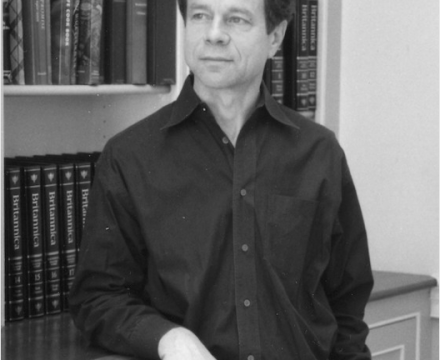
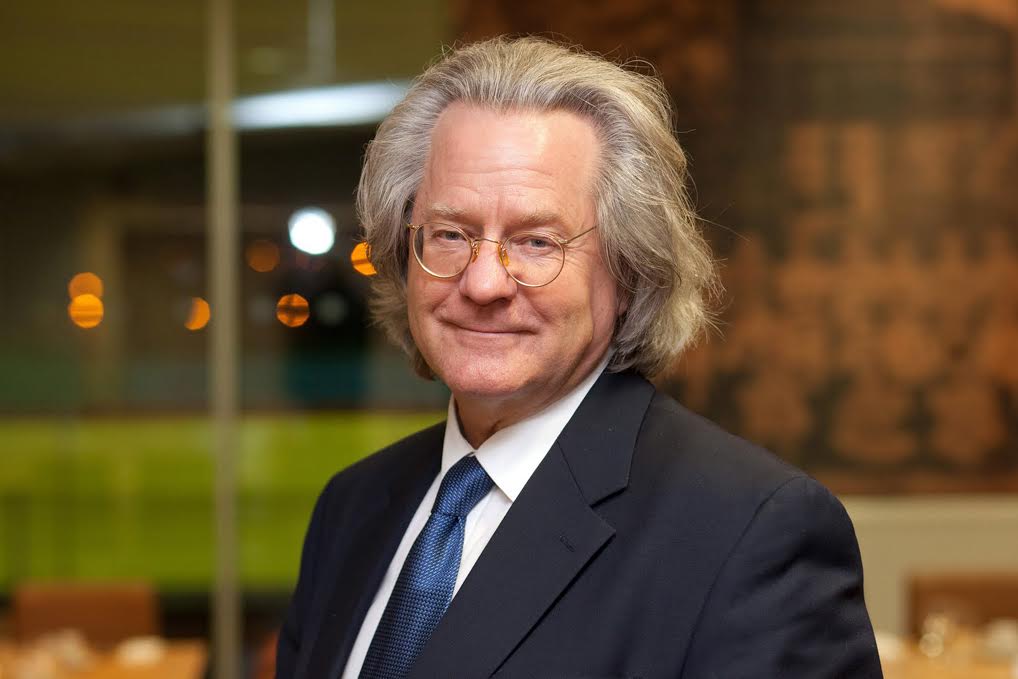
AC Grayling is Master of the New College of the Humanities. He has written and edited many books on philosophy and other subjects. His latest books are “The Good State” (2020), “The History of Philosophy” (2019) and “The Frontiers of Knowledge” (2021)
Lets’ start at humble beginnings, tell me about your early life, and your journey to where you are at present…
My father worked for a London bank whose operations were mainly in the Far East and Africa, and he was posted to Northern Rhodesia (now called Zambia) in Africa as a young man. He took my mother there when they were married, and I and my siblings were born out there. I spent my childhood and part of my teenage years there and in Nyasaland (now called Malawi), and as these were remote places there was no TV, scarcely any cultural life – we read a lot.
What sparked your interest in philosophy?
At home we had a set of encyclopedias which I spent huge amounts of time browsing as a kid, fascinated by everything in it. The pictures of busts of Socrates, Plato and Aristotle and the articles about them interested me intensely, and when I reached the age of 12 and could get a ticket for the adult part of the local library I found the Complete Works of Plato in the translation by Benjamin Jowett. (The library had an eccentric collection, bequeathed by people who had gone out to Africa to ‘run the Empire’ and died of tropical diseases; they had brought their university books with them). I opened the first volume of the Complete Works at the translation of the Charmides – and was permanently hooked. Other philosophical classics were hard to come by, but at age 14 I bought for a few pennies a battered copy of GH Lewes’s Biographical History of Philosophy and read it about a dozen times before it fell apart in my hands. In the process I discovered a wonderful thing: that philosophy, which in essence means ‘rational enquiry’ about anything and everything, invites one to be curious about everything and anything – indeed, demands that one be so. And that opens the whole universe, history, humanity, society and possibility to one’s exploration.
Where does philosophy start?
It starts in curiosity, a desire to make sense of things, a refusal to take things for granted, and a refusal to be satisfied with quick or shallow explanations. Although it seeks answers it accepts and profits from the fact that there are more questions than answers, and that the attempt to answer even the most difficult questions is powerfully educative: as the poet Paul Valery said, ‘A difficulty is a light, but an insurmountable difficulty is the sun’.
What can philosophy teach us about the global pandemic?
It teaches us about hubris, about globalized humanity racing ahead of itself and getting beyond itself, it teaches endurance, it teaches us how ingenious humanity can be in face of urgencies (think of the vaccine development), it asks us to be generous and tender towards the hundreds of thousands of people who grieve for those lost too early, it asks us to reflect on what really matters individually and socially, it teaches us new strategies for living and relating. It teaches us that nature is powerful and can be very dangerous.
Tell me more about your work campaigning to get the UK back into the EU?
Brexit is a mistake of historic proportions. Rejoining the EU is a priority for people who care about the future not just of the UK (or the component nations of it, if the UK breaks up which is more likely today than it has been for centuries) but also of Europe and the world: because the EU, for all its flaws (it is a work in progress) is a marvelous model for the future: international cooperation, soft power, high standards in all respects from food quality to civil liberties, progressive policies and peace. Indeed, the EU is a great project for peace in a continent which for so long was riven by internecine war and conflict. It is important to me that the British should be part of setting a new trend for the way the world should live with itself, because it has the opportunity to take a leading role in European progress. The US and the new would-be global hegemon China are old-fashioned nineteenth-century-type powers, believing in military might as an adjunct of economic power; the EU offers a completely different and better model. The current group of xenophobic nationalist right-wing politicians who have taken the UK out of the EU against the interests of all and the will of most in the country (I have provided an analysis of the Brexit phenomenon in recent books, Democracy and its Crisis and The Good State) represent a very retrogressive impulse of the same kind as the likes of Trump in the US, Orban in Hungary and Erdogan in Turkey.
Tell me how can I support, and how can people reading this get involved in your efforts….
At every opportunity – on Twitter, Facebook, in the voting booth, everywhere and anywhere – one should voice and enact support for getting the UK back into the EU. There is a very feasible route to doing so, if political tribalism on the centre-left of British politics can be overcome (a big ask): if the progressive parties can unite on a platform of electoral reform to get proportional voting, and if there is then a genuinely representative parliament* there can be another referendum on the question of EU membership. It is a certainty that this would assure our return. Indeed, return is inevitable: the question is how long it will take. The longer it takes the greater the divergence between standards, so the sooner we rejoin the better.
[*The current First Past the Post voting system in the UK results in minority government: the current Conservative government has a huge 80 seat majority in the House of Commons, which means 100% power, secured on 43% of votes cast, representing 29% of the electorate. Like the US with its First past the Post system for the House of Representatives the result is two-party politics, other voices squeezed out; two-party politics is polarizing, pushing the opponent to further extremes, reducing political debate to slogans and slanging-matches.]
I’m British, and I spend a lot of time in the US, it wasn’t until spending more time in the US, that it led me to consider what it means to be British, and how the world perceives the UK….
Until recently the British saw themselves as having several overlapping and not inconsistent identities, which were reflections of others’ attitudes to them: the British gent, the British butler, the cool Beatles-type Brit, and the Brit with bad teeth and a Cockney accent. Others saw us as a mixture of arrogance, insularity, the boorish beer-swilling behavior of football hooligans, as people who always come late to the party (e.g. joining the EEC/EU late), always losing the first part of wars, but with a few enviable things like 007 and the castles and country houses of the aristocracy.
What does being British mean to you?
It used to mean having steady values, probity, a comfortable tolerance enabled by a usefully flexible and ramshackle socio-political order in which nothing mattered enough (the drunken loyalties of football crowds excepted) for us to go to internal war against each other; a kind of innate Magna Carta personal liberty that allows for eccentricity and individuality. Since Brexit, revelations of appalling corruption in politics, racism and xenophobia in sections of the population, and the supine response of the population to political dishonesty and the collapse of our country into international pariah status, I am no longer proud to be British, but rejoice in being European – belonging to a family of peoples which includes Beethoven, Rembrandt, Shakespeare, Descartes, Einstein, Goethe, Michelangelo…
What does it mean to be British and a post-Brexit world?
As the foregoing implies, Brexit has reduced the standing of the UK in the world; the current government is not trusted to keep its word and not trusted to honour international obligations; trillions of dollars of financial assets have fled the country, it is not attractive to investors other than those waiting for the dismantling of the NHS and such other services as can be bought up by the private sector, or for the economy to become a deregulated offshore tax-haven, which is where it is headed.
How do you feel Brexit will impact the UK?
It has already had a negative impact, as the foregoing implies, and I see it getting worse.
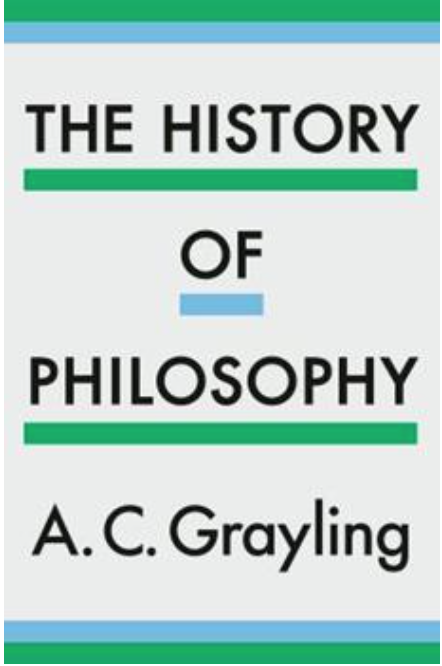
Your book ‘The History of Philosophy’ is a great read on the masters over the years, including arguments for flaws in some theories. Which philosophic ideas resonate most with you?
The philosophers whose thinking has been informative for me include Aristotle, Hume, Kant and Russell; in ethics and social thought the Stoics (especially the early Stoics) and Mill. The idea that the cognitive architecture of the mind contributes much to shaping how the world seems is variously argued by the first four (from Aristotle’s ‘categories’ to Russell’s ‘a priori postulates of scientific thought’), while the Stoics and Mill provide a framework for thinking about individual responsibility and freedom in the context of liberal and progressive social politics. Two considerations apply in the study of philosophy: to think for oneself, and to appropriate and apply insight and wisdom, wherever it is found, in the formulation one’s views.
Lets’ talk about creating ideas, what ideas will be shaping the world in years to come?
When we have made progress in deciding how to manage the uses of AI in the operation of so much that happens in our world (from surgery to weapons systems, from education to the administration of justice, and much more), and in genetic engineering in human medicine – we are far from knowing how to manage these potentially wonderful but also potentially extremely harmful developments: see my forthcoming book For the Good of the World (Oneworld February 2022) – we will be able to see with more clarity what the future, and future people, will be like. At present we are in a situation of confused transition, everything happening so fast in technology, communications, the effects of social media on people and politics, and the shifts in international economic power, that we do not know where we are going: a situation at least uncomfortable, at worst perilous.
What are you currently working on?
Having just delivered to my publishers the next book, For the Good of the World about climate change, technological developments as mentioned above, and the deficit of social justice and human rights in the world, I am now working on a major book Philosophy and Life for Viking Penguin, due to be published in spring 2023.
What has been a pivotal moment in your career?
There have been a number; but two of particular note are when I went to Oxford as student, and when I decided to found my own College.
Who’s been your biggest influence, and why?
I find inspiration in all those, in any field of endeavor, who aspired to the utmost, who dreamed but who acted on their dreams – examples of aspiration have been the biggest influence, because they all speak to a fundamental consideration: that it is up to each of us, individually, to create meaning in our lives by applying ourselves to what we recognize as intrinsically worthwhile – perhaps a different thing for each of us, which means that there is no one-size-fits-all answer to the question of what makes life meaningful. And at the same time, we recognize that we are social animals, and need to be in relationship with others: heart of good lives are good relationships, so these too must be goals, and they demand the best of us.
What do you laugh about?
I like wit, absurdity, the comedy of situation, more than I like punch-line jokes. Tristram Shandy makes me laugh aloud just when I think about it.
What do you cry about?
‘Then can I drown an eye, unused to flow/For precious friends hid in death’s dateless night/And weep afresh love’s long since cancelled vow/And moan the expense of many a vanished sight’ – Shakespeare Sonnet 30 – says it all. I always and unstoppably tear up listening to opera, in which the largest human emotions are the actors of the drama; Un bel di vedremo in Madame Butterfly is a special case in point, thinking of what it means in the context of that story: the hope and the catastrophe of love. But in general: the huge burden of suffering that human folly loads upon itself, throughout history, in many pixillations – such as my family’s name on the Menin Gate at Ypres, commemorating the dead of the First World War; and so on.
What rules do you live by?
A personal adaptation of Stoic and humanistic precepts about commitment to work, endurance, stepping up and taking part when things that matter have to be done, and treating others with consideration. The Stoic principles apply to oneself, the humanistic principles apply to one’s approach to others. Humanism teaches that one should be as generous and sympathetic as one can be to the frail, various and sensitive alloy that is human nature – though of course not to the point of tolerating those who are cruel and greedy, and not being over-generous to stupidity, though a smidgeon of this is a good thing since one hopes others will forgive one’s own stupidities at times.
What advice would you give to your younger self?
To listen to those with experience. Those who do not listen have to take the long way round and learn everything the hard way, namely by repeated mistakes. That was me, too often, when young and green.
Tell me about your biggest lesson?
It takes a long time to accept home-truths about oneself, because so many of us are prone to excusing ourselves too easily when we have hurt others. When relationships end, one learns big lessons about how one could have been a better friend, a better partner, to people one cared about but have hurt: I’d say that my biggest lessons have been there.
What do you want to be known for?
I should like to be known for my writings and the views they convey, views about what it is to live the good and worthwhile life and to be a contributing part of humanity’s journey onward.
Recommendations?
Essays by Voltaire, Hazlitt and Schopenhauer, novels by George Eliot, Thomas Mann and Saul Bellow, music by Schubert, Brahms and Puccini, almost any film noir but especially those with Ida Lupino.
What’s coming up for you in 2021?
For my just-published The Frontiers of Knowledge (Viking May 2021) I’m giving talks at literary festivals, at present by Zoom until Covid travel restrictions lift, and otherwise using the difficulty of those restrictions to focus on the current writing, mentioned above, and keeping fit (given that lockdowns and restrictions offer the alternatives of becoming ‘a hunk, a chunk or a drunk’ – respectively get fit, get fat, and/or drink too much – it’s best to go for the first).
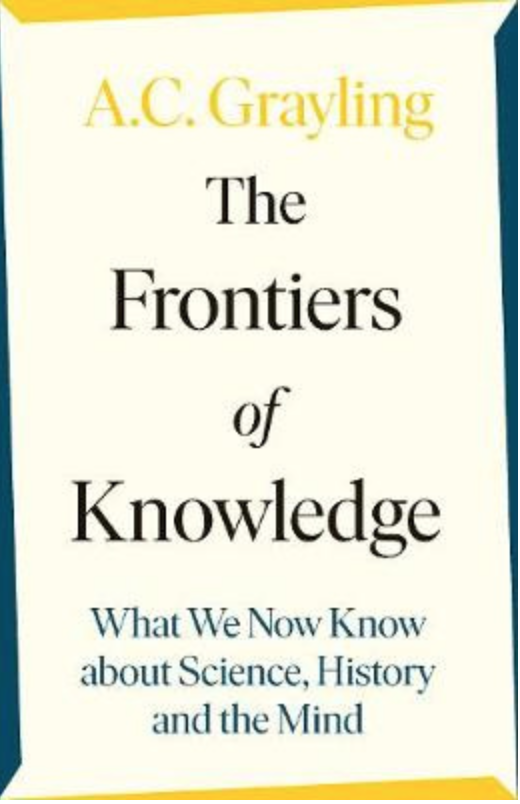
Some forthcoming events which readers can join:
Lunch with Books Livestream: The Frontiers of Knowledge with A. C. Grayling
June 15, 2021
Wimbledon Book Festival – talk on The Frontiers of Knowledge
Sun 19th Sept 2021
A C Grayling on The Frontiers of Knowledge in Bath, UK
28th September, 2021
Ilkley Literature Festival, UK – talk on The Frontiers of Knowledge
Tues 5th October 2021
Cuckfield Book Festival, UK, talk on The Frontiers of Knowledge
Sat 9 October 2021
Petworth Literary Festival, UK, talk on The Frontiers of Knowledge
Sat 30 October 2021
Bridport Literary Festival, UK, talk on The Frontiers of Knowledge
Mon 8 November 2021