

mailing list

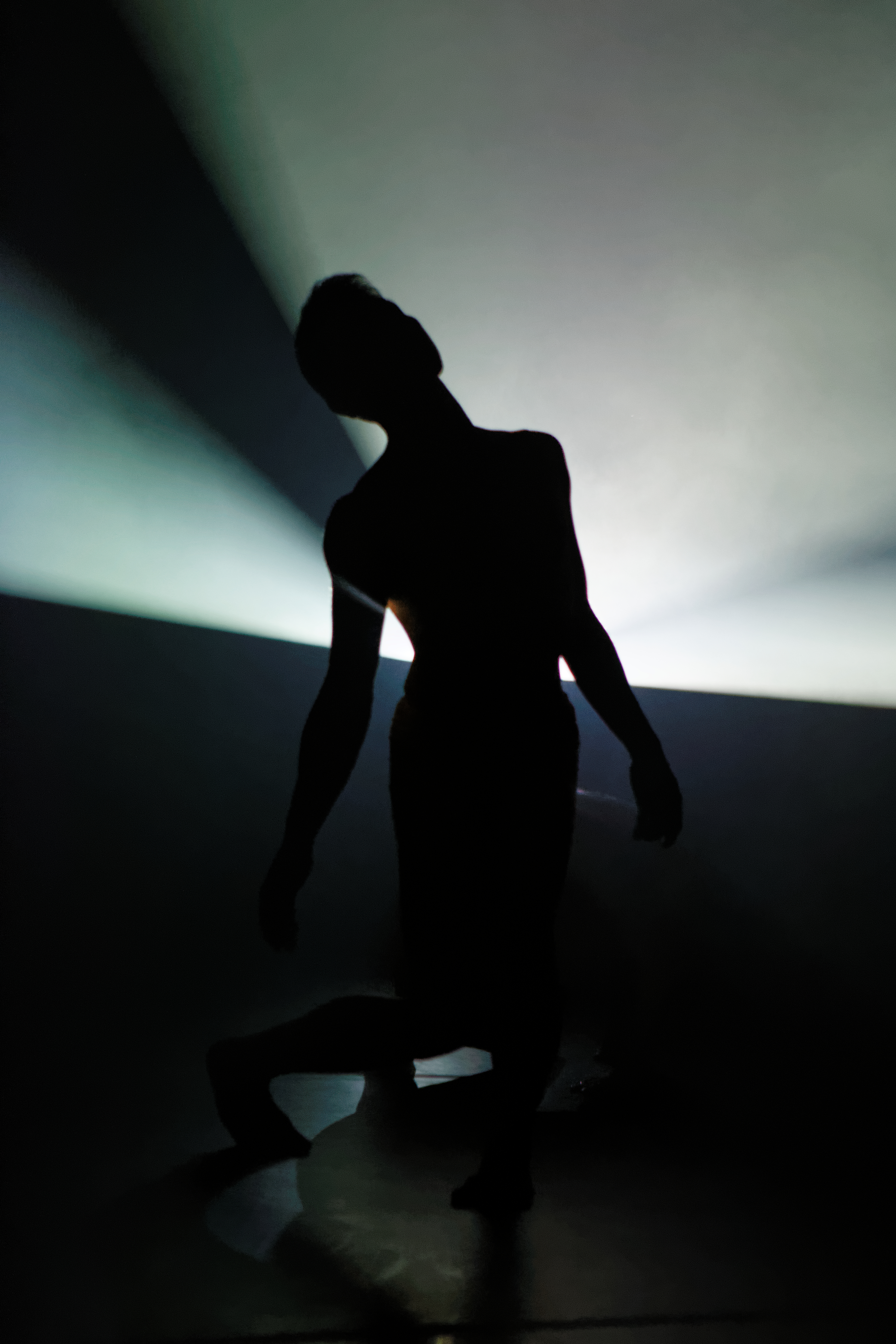
Directed, choreographed and designed by Brooklyn-based multidisciplinary artist duo Ximena Garnica and Shige Moriya, Extinction Rituals is inspired by acts of remembrance celebrating the life and loss of animals, plants and environments from the places they call home: Kyoto, Bogota, and NYC. Through poetic vignettes of movement, light, music and song, these mesmerizing tableaux weave together an original score by Oscar-nominated composer Kaoru Watanabe, the powerful voice of Colombian singer Carolina Oliveros, and the butoh-rooted work of Garnica and Moriya’s LEIMAY Ensemble, including dancers Masanori Asahara and Krystel Copper.
Extinction Rituals will run for two performances on June 9 and June 10 at Japan Society as part of the Society’s 2022-2023 Performing Arts Season. Following the work-in-progress showings, Garnica and Moriya will sit down for a Q&A with the audience to elaborate on the international exchanges behind their timely and profoundly collaborative piece. For this exclusive Hatchers interview, Japan Society’s Artistic Director Yoko Shioya spoke one-on-one with co-creators Garnica and Moriya to discuss Extinction Rituals, Garnica’s work with MIT, and the future of the LEIMAY Ensemble.
Yoko Shioya: How did you first meet each other?
Ximena Garnica: We met more than twenty-one years ago. Shige was attending a butoh workshop in upstate New York. During the workshop, Shige was involved in a bad car accident. After the collision, I kept him awake until the ambulances arrived almost an hour later to the remote mountain we were on.
Shige Moriya: You could say that a spider’s net in the car’s windshield was the beginning of our journey.
YS: What is LEIMAY, and what inspired its creation?
XG: Shige started the space known as CAVE back in 1996 in Williamsburg, Brooklyn. After we started to collaborate artistically, we wanted to create an entity that was simultaneously connected to the CAVE space but also served as an umbrella for the creation of our art works and an incubator for a performance company. That company later became the LEIMAY Ensemble.
SM: The word “Leimay” means “moment of change,” but we are also addressing the change between one era to another. With the creation of our company, we were opening space for the in-between, for the beginning of a new journey of living and working together. This in-between space allows for circulation and for the flow of ideas, bodies, temporalities, identities and the tension which is vital to creation.
YS: What is the methodology of your LUDUS program and what does that work entail?
XG: For us, LEIMAY reverberates with liminal states, change, and transformation. We continue to develop those ideas with LEIMAY LUDUS, alongside the members of our company, the LEIMAY Ensemble: Andrea Jones, Masanori Asahara, Mar Galeano, and Krystel Copper. “Ludus” comes from the Latin word for training, games, and play. LUDUS provides a different kind of working foundation for our creations. It searches for a permeable body, sensitive to subtle energetic connections while questioning ideas of perceptions and relationships. LEIMAY LUDUS grows out of the performer’s senses and physicality, cultivates imagination, and incites a heightened awareness of gravity, friction, and weight. It nourishes deep states of listening and explores potential connections between the body’s materiality, its voice, and its thoughts and between spaces and materials to reveal domains of transformation and potentiality.
SM: The body conditioning aspects of LEIMAY LUDUS are constantly evolving, but its roots are in our work with Japanese butoh dancers, Noguchi Taiso practitioners, and other singers and actors working within experimental practices and techniques.
YS: As immigrant artists, is the NYC dance scene/artistic communities what you imagined it to be or was there a disconnect between what you imagined NYC would be like before arriving and your lived realities now?
SM: My image of New York was a place with people from all over the word and an art scene as diverse as its people. And so it was. New York City is a place with constant frictions, with sparks everywhere. Today the cost of living has increased tremendously and this, more than almost anything else, has affected the way we used to relate and create communities. Even so, NYC still has a mercurial energy that awaits at every turn.
XG: I had no expectations about New York before I arrived. I was 16, by myself, and just loved being in Manhattan. I can still feel the sensation of being underwater on the street, hearing so many voices in the air without any clue of what they meant, catching random impulses, being dazzled with the city’s poets, performances, films, the subway, the streets, the buildings. New York City ugliness is often transformed into beauty, its beauty back into ugliness; its cruelty becomes resistance and its noise becomes music. Like magnets, we are all attracted to each other and that powers the city as each magnet in turn is attracted to another. We continue to spin as we care for our spaces so these currents can flow. All that is to say that there isn’t a single “artistic community.” These lived spaces change as the people change. The evanescence of that motion keeps me curious and alive.
YS: Could you speak more about your current collaborations with the MIT Center for Art, Science & Technology?
XG: I started to teach acting and movement classes at MIT Music and Theater Arts in 2021. I am applying our research, the questions we’ve been asking and the personal reflections we’ve made around non-eurocentric notions of space, time and bodies. Embodied knowledge, the ingrained knowledge each of our bodies has in its cells, is vital. I call it “Embody” and I believe it needs to be practiced both through and with the body. I find it powerful to engage in Embody practice with students who are building knowledge in disciplines outside the arts as it creates resonances that can generate new insights within other structures of knowledge. There is a lot that the embodied arts can contribute to academia, especially in this moment where societal value systems are shifting and historical paradigms are being confronted.
For me personally, it is tremendously inspiring to meet the academics at MIT that create futuristic technology. We are currently working with people who designed the new space suits, the spaceship that will go to Mars, cyberneticists, environmental scientists, nano-technologists, engineers, and nuclear scientists. It is like an encyclopedia of knowledge! While working there, I have had the opportunity to bring Shige and the LEIMAY Ensemble to perform and engage with the students through a video installation of our multi-year project Correspondences. Through this work, I believe we are planting the seeds for a future collaboration between LEIMAY and other faculty members and students. I am looking forward to continuing teaching in 2023.
YS: Can you speak about LEIMAY’s new facility in upstate New York?
SM: This is a relatively new vision and our new upstate space is very much currently in process. It will be intended as a nest, a place for respite, a place to craft, a place to experiment with different dimensions of sustainability. This opportunity emerged out of a personal crisis; during the pandemic, we almost lost our home and studio of over two decades in Brooklyn.
XG: We were ultimately able to keep the space but that conflict crystalised the many opportunities and challenges we had during COVID. Our new facility will be a manifestation of that in-between moment. It is a space for the tensions between our urban, rural, semi-rural, and suburban studio and living spaces and how they influence the creation of art. We are cultivating these tensions and directing the resources they produce toward this new facility.