

mailing list
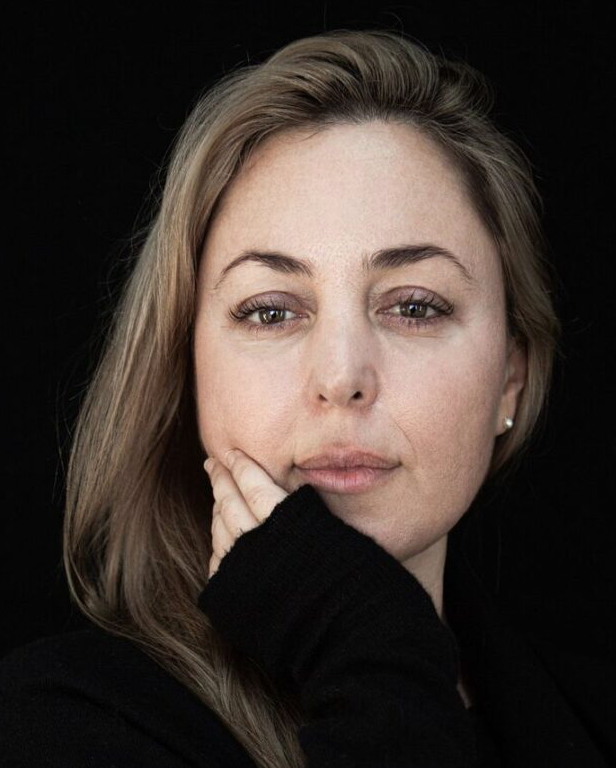
Composer Paola Prestini has collaborated with poets, filmmakers, and scientists in large-scale multimedia works that chart her interest in extra-musical themes ranging from the cosmos to the environment. Her compositions have been commissioned and performed at the Brooklyn Academy of Music, Barbican Centre, Cannes Film Festival, Carnegie Hall, the Chicago Symphony Orchestra, The Kennedy Center, Los Angeles Philharmonic, and the Los Angeles Opera, among others. She created the largest communal VR opera with The Hubble Cantata, was part of the New York Philharmonic’s legendary Project 19 initiative, and has written and produced large scale projects like the eco-documentary The Colorado narrated by Mark Rylance (premiered and commissioned by the Metropolitan Museum of Art and Houston Da Camera Series) and the lauded opera theater work Aging Magician (premiered and commissioned by the Walker Arts Center and the Krannert Center, with performances at ASU, the New Victory Theater and San Diego Opera).
Prestini is known for her genre- and glass ceiling-breaking roles, including being the first woman in the New Works Initiative with her grand opera Edward Tulane (Minnesota Opera), and bringing artificial intelligence and disability visibility/impact together in the chamber opera Sensorium Ex (Atlanta Opera and Beth Morrison Projects for the Prototype Festival). Her upcoming works include piano concertos for Awadagin Pratt and A Far Cry, and Lara Downes with the Louisville Symphony, Oregon Bach Festival, and The Ravinia Festival.
She is the co-founder and artistic director of the Brooklyn based arts institution and incubator, National Sawdust, and as part of her commitment to the next generation and equity, she started the Hildegard Competition for emerging female, trans, and non-binary composers and the Blueprint Fellowship for emerging composers with The Juilliard School. She was a Paul and Daisy Soros Fellow and a Sundance Fellow, has been in residence at the Park Avenue Armory and MASS MoCA, and was a graduate of the Juilliard School.
Where did the idea for National Sawdust derive?
Kevin Dolan, Lawyer, arts lover and composer approached me with the idea for a home for emerging composers and artists. Having started a nonprofit that was about collaboration and incubation to dissemination in my twenties, I jumped at the idea of having a physical home and what that could mean in terms of grounding my ideas, and helping our local and national scene.
Tell me more about the structure and design of National Sawdust…
The building was designed by ARUP. It’s a box in box construction meaning it is like a suspended cage: perfect for recording and keeping out the sounds of our busy Williamsburg neighborhood. The model was inspired by Esterhazy, the idea of composers writing for a specific space, and a community coming around that innovation. Recently, Meyer sound added to the sound by bringing their constellation system and space mapping, which allows a deep level of sound modulation and creation. It’s really a musicians dream!
What is National Sawdust’s main focus?
Our focus is to help nurture new music across styles, and to help bring equity to music composition through specially designed programs that bring artists from incubation to dissemination. For our audiences it is a center for music discovery, and hopefully through curation and an open minded spirit, we are creating a community that is representative of NYC, which I’ve always seen as a bridge to the rest of the world.
How has the last twelve months been for the National Sawdust business?
It’s been a complete re modelling of our business plan and offerings. We never stopped: we created digital commissions and offerings from May 2020 onward, and master classes documenting how the pandemic was affecting artists and their craft. This past January 2021, we moved into a space of music and dance, and deep lab work with a group of 45 women and nonbinary artists. Understanding how to achieve a sense of ephemerality in the digital sphere was a guiding force, and of course, how to helping guide careers in moments of complete transformation and modularity.
What can fans expect from National Sawdust in the coming months/year?
Fans can expect great programming, a mix of live and digital, and a doubling down on our offerings for deep process work and the incubating of new work. It’s going to be an exciting and fresh start!
How can artists who are interested in performing, or being part of the incubator get involved?
We have an open call for all our competitions, no fees or letters of recommendation needed, and our director of programming Nicole Merrit is amazing and has an open ear. Also, in general, there is always a way to get to someone who knows one of us, and we take all recommendations seriously!
If you could have anyone performing at National Sawdust who would it be…
Bjork! and Ismaël Lô!
You’re a mother, a business owner and a composer – you do so much! How do you structure your time?
I structure it as best I can-I focus on one given task at hand deeply, and let go of what I can’t do without too much thought. As I move out of the founding of National Sawdust and this first phase, I am moving more into strategy, composition, and living life, quite honestly. It’s been a ton of sacrifice, and I am excited to enjoy this next phase.
What is coming up next for you and your personal practice?
I have two operas premiering this coming year (rescheduled due to COVID) with San Diego Opera and Minnesota Opera! It is an exciting time. This Fall I release my first album with my husband, cellist Jeffrey Zeigler called Houses of Zodiac-coming this Fall. The audience experiences the houses of a zodiac through a visceral multi-channel performance of world class cello, and the first butoh and ballet collaboration. It is a multi-channel film and experience at the intersection of butoh, ballet, and cello, captured by the Turkish photographer and filmmaker, Murat Eyuboglu (his work The Colorado that I produced and scored is currently on PBS). The film represents a zodiac and house based on Sol LeWitt in which the viewer loses and finds themselves alongside the characters. With poetry by Natasha Tretheway, Anais Nin, Brenda Shaughnessy and Maria Popova, and NYCB star Georgina Pazcoguin, Sankai Juku member Dai Matsuoka, and Kronos Quartet cellist Jeffrey Zeigler. The music additionally features Tanya Tagaq and Nels Cline. It was created at Mass Moca, and I like to call it my family album!
The first is Sensorium Ex is a new opera for Atlanta Opera and the Prototype festival, and it includes poet Brenda Shaughnessy (who Hilton Als calls ferocious), the Copenhagen based impact group Enactlab, and the choreographer Jerron Herman. We are in the process of creating an AI whose voice and movement is the composite of collected data sets of disabled bodies and voices. A prompt is asked and an augmented reality and sonic experience is created from people’s responses that are then fed into an algorithm I am creating to create a composite voice and motion censored AI. The AI will eventually help voice recognition represent a larger population of non abled people. The findings will inform the opera and scientific research.
Old Man and the Sea is an opera theater immersive and interactive work commissioned by Arizona State University and Carolina Performing Arts. With Slovenian director Karmina Silec, Cuban artist Maria Magadalena Campos Pons, librettist Royce Vavrek and me. A boat created by Campos-Pons is boarded, and interviews with an aging population on the aging body, voice, and experience are collected and sonically threaded through the performance of the opera. It in a sens a reclaiming of Hemingway’s Cuba through a Cuban artists’ lens.
Lastly, I have beeb working on my podcast, Active Hope, with the Kennedy Center and the Apllo Theater. It is about leadership, hope, and we’ve delved into deep questions surrounding race, immigration, futurism and aesthetics. My co-hosts, Marc Bamuthi Jospeh and Kamilah Forbes are also leaders and creators. It’s been amazing, and our guests have ranged from Van Jones to adrienne maree brown, to the first Latina mayor of Tucson, Regina Romero.
Talk to me about the importance of incorporating technology into your practice…
I incorporate technology as a tool when needed-either as electronics in my work, either as backing tracks or interactive elements, or as a tool for deeper connection with the communities I am involved with or working with. I don’t see it as a separate part of my language,
What’s the main message you aim to communicate within your work?
I aim to connect-quite literally with the artists and communities I work with. That is my greatest hope, to illuminate new paths forward in a shared collaboration and existence, and to enjoy the continual process of growth that happens from those experiences.
Does your art derive from personal experiences?
Sometimes! Most often it derives from a question burning inside me, or inside of the hearts and minds of my collaborators. Sometimes, it is a literary prompt that gets me, or an existential question!
What emotions do you aim to evoke when people experience your music?
Raw emotions, and feelings of curiosity.
Lets’ talk about censorship, do you feel completely free to create the work you want to create?
Yes, I have always felt free. Often I coproduce my own work, which has allowed me to choose my collaborators and themes. I love working in all environments though as I see it as a balance of learning how to navigate my craft and the world.
Who’s been your biggest influence, and why?
I have been influenced by so many…I love John Zorn for his music, eclectic taste and commitment to community. I love Meredith Monk and how she’s beat to her own drum. I loved John Cage for his mind that was equal parts thinker and composer, I was moved by the music of Silvio Rodriguez and Mercedes Sosa, and admire my colleagues Marc Bamuthi Joseph and Kamilah Forbes for their combining artistry with leadership.
What do you laugh about?
My son, when we’re together-we laugh about our favorite TV shows, and laugh about our dog Jolene.
What do you cry about?
The unfairness in our field and our world.
What rules do you live by?
I live by my inner compass and ethics.
How do you get into your daily flow?
By setting up my work station wherever I am.
What advice would you give to your younger self?
Don’t think too much about the future, think about now. Try to be healthy and try to enjoy the very long road towards change.
Tell me about your biggest failure (or lesson!) , and what you learned?
Not understanding my own power and letting people with perceived power dominate me. We are stronger than we know…
What’s your philosophy for life?
Be the change you want to see.
What do you want to be known for?
My unwavering commitment to what I put my mind to, and hopefully, vision.