

mailing list
“No one really knows
what’s going on.”
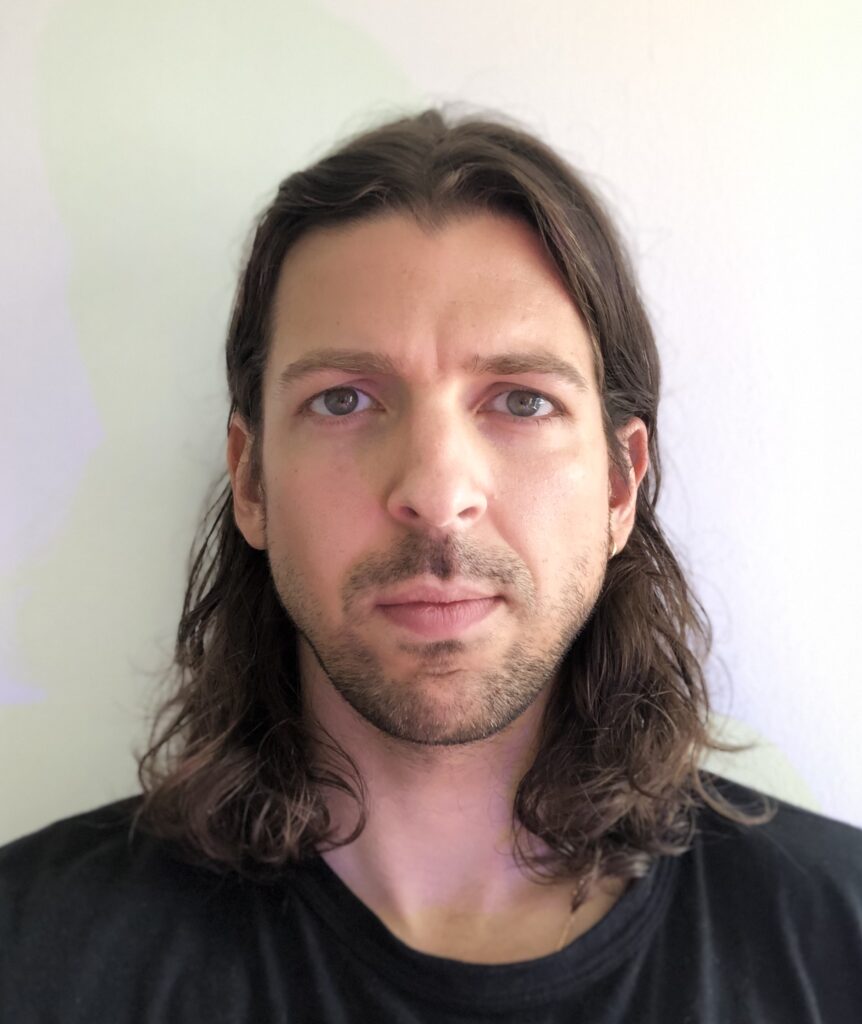
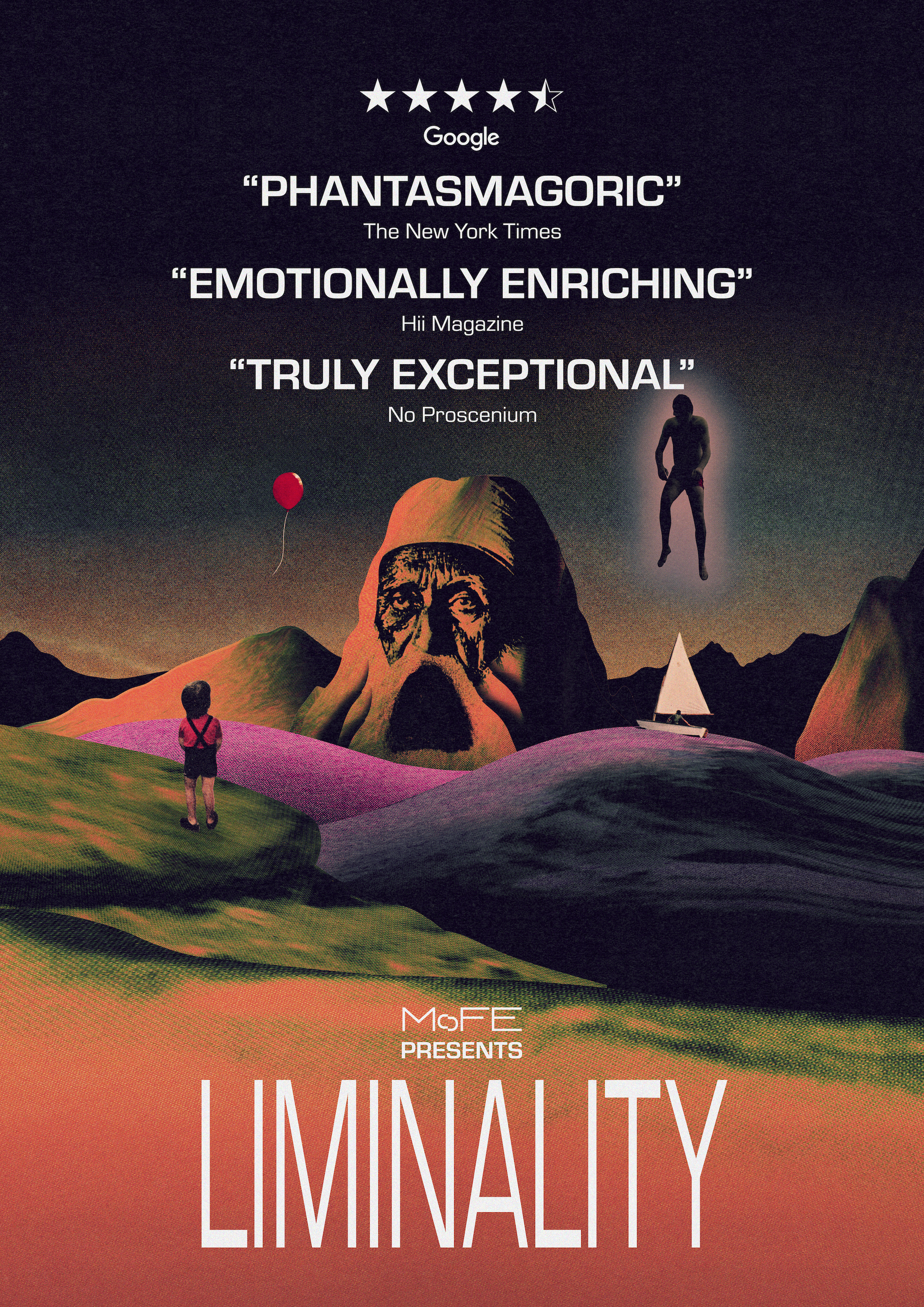
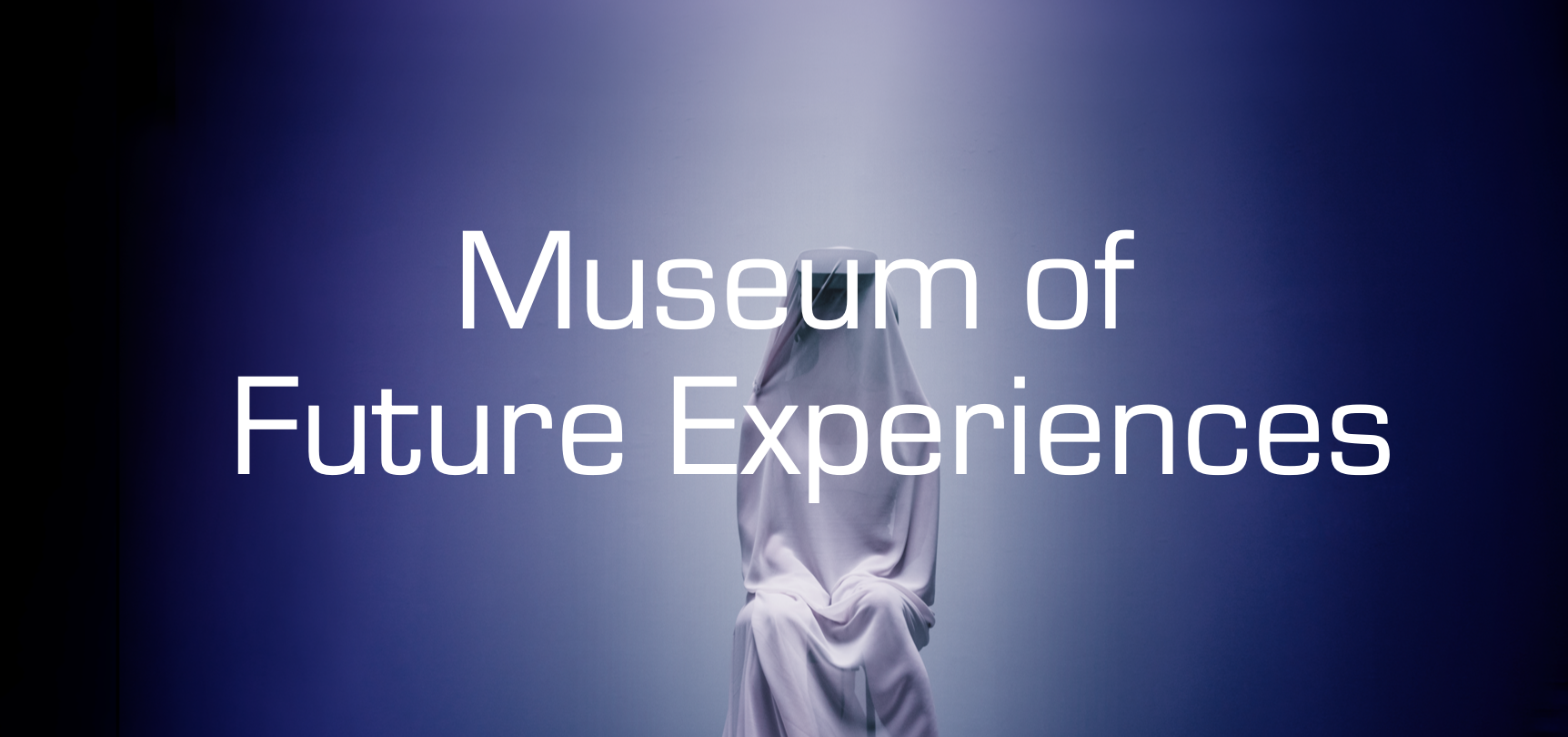
David Askaryan is the founder of Museum of Future Experiences, (MoFE), a venue in Brooklyn, NY for immersive storytelling that combines Virtual Reality and Ambisonic sound design. MoFE productions are seated, ticketed shows that run 70 minutes and are limited to 16 guests. Each show is like a guided lucid dream, induced technologically.
Hello David! Thanks so much for taking the time to answer these questions. Talk to me about your current feelings and emotions…
Hard to pin down. These days, I feel like I’m changing.
Let’s start at humble beginnings, tell me about your early life, and your journey to where you are at present…
Mainly grew up in Florida, mosied around the Northeast and New England for the past decade, and currently living in Brooklyn. Lots of side stories before, in-between, and after. No matter the location, I have been creating things. It’s what keeps me going.
Tell me about your journey to creating the concept for Museum of Future Experiences (MoFE)?
I’ve always enjoyed creating immersion for people in one way or another. With VR specifically, I began experimenting a few years back, starting with a simulation I built that was meant to induce out-of-body experiences in people. Some people cried. One friend called it “the ego death machine” — kind of an overused aesthetic these days but it stuck with me. It became a little art project where I’d just show up to friends’ apartments with an orange suitcase filled with a computer, a VR headset, and some strange things to show them. I played this character. It all kept escalating from there. Now we have a MoFE venue in Brooklyn.
What or who were your biggest influencers for MoFE?
The biggest influencers for MoFE have been our fans and our team. When I see people feel something after experiencing a MoFE production, I want to do more for them and am inspired to keep making new things. Our team, small but mighty, are the most imaginative, creative and hard working people I have ever met. They influence the trajectory of the art, music, storytelling and technology at MoFE. We are all connected by a shared deep curiosity, a love of art and new technology, and a desire to create something totally new.
I feel like it’s essential that I mention the book collection in the foyer area, tell me more about the reasons for displaying them, and how they influenced you and the concept of MoFE…
These are all books that have influenced the MoFE team and our productions. It’s mostly our artistic director’s collection. She often jokes that she finds the most interesting parts of books to be the footnotes because this is where one can discover the author’s method of research and inspiration. In some ways, all the books are like footnotes to the show. We hope that our guests can find something for themselves on those bookshelves.
Why a virtual reality experience? (and why are those experiences so important now?)
I don’t know if VR experiences are necessarily so important now. I love the platform because of the type of storytelling one is able to achieve. It’s different from watching a fixed-perspective film and there is so much more latitude in what can be expressed, how it can be expressed, and how it feels to consume it. We love using technology for story-telling — VR is but one medium that we employ.
I read via TechCrunch that you started via Y Combinator, tell me more about that and the experience?
YC is a startup accelerator that admits two batches of companies each year. I applied to YC after I thought that MoFE could be more than an art project. The partners there collectively have a ton of wisdom about building companies and have helped me shape the way I’ve approached building MoFE. The value wasn’t in any big epiphany type of takeaways. It was more aggregate of hundreds of small nuggets of value that overall elevated things. Really enjoyed my summer there.
How has your experience as a MBA Harvard business graduate helped you?
HBS uses the case method, which means the students play the role of a decision-maker, based on a real person in a real organization, amidst a challenge they’re facing leading a company. Each case was kind of like a great drama unfolding, which I quite enjoyed. Broadly speaking, what has helped the most was being in a class everyday with really inspiring students from all sorts of different backgrounds from all over the world and hearing their thoughtful perspectives about each case we studied. It really crystallized for me how stunted thinking in absolutes is (ie “this good, that bad”) — there is just so much complexity to how the world works.
Talk to me about the importance of engaging each of the senses?
The importance lies in how many senses are engaged at the same time and contrasting that with sensory-deprivation. There’s a compounding effect when senses are stacked together — for example seeing, hearing, and physically feeling simultaneously creates a premium in the overall immersion. Contextualize that with the void, and then we’re cooking.
“VR on the other hand, forces you
to be there in that moment”
I like the concept that technology is being used (VR) to distance people from their cell phones – people cannot be scrolling on their phones whilst in the VR experience – talk to me a bit about this…
Phones are virtual realities. Or maybe more like a gateway to fractured realities: oscillating between email, text, and scrolling social media, while you’re struggling to pay attention to your friend’s muffled yet immediate voice walking next to you, while you’re also trying to not get t-boned by a car as you cross the road. VR on the other hand, forces you to be there in that moment — it’s one reality that demands all your focus and attention.
I’m big on meditating, and something I find interesting with technological advancements is how visualising isn’t too dissimilar to meditating with ones’ own mind, to holograms and virtual reality…what are your thoughts on this?
They’re mixed. VR certainly has the potential to quiet and focus the mind by cutting out outside distractions and providing visuals and sound to help facilitate a meditative state. Still, being in VR can create an incredible cognitive load in a way that’s misaligned with the goals of meditation. How does this net out? I don’t think we really know just yet — there’s a lot of exploration to be done. Which is what we find interesting and are doing at MoFE.
What emotions do you aim to evoke when people experience MoFE?
Our aim is singular and that’s to show our guests something they’ve never seen before. We think this is the best way to feel curiosity, surprise, and magic. Today, with how stories are being told, how everything has reviews online, and the way we are targeted with data — everything is predictable, systemized. The delight of magic and surprise feels rare, and I believe having those emotions are an important part of being a human.
Who are the artists currently on show at MoFE?
We work with a number of different artists, writers, musicians, fabricators, and technologists. The three VR pieces in our current show are created by Peter Lindblad, Dominik Stockhausen, and Marc Zimmerman.
What are you currently working on for MoFE?
A spooky show called Halloween Radio.
If creators reading this would like to submit work for consideration for licencing for future experiences, is this possible? What are the details…
Yes, most definitely. We are always looking for new artists to work with and new pieces to license for MoFE. If you have work that you think would fit with MoFE’s style or want to work with us email us at info@mofe.co.
Who’s been your biggest influence, and why? (doesn’t have to be MoFE related)
My parents as they’re pretty much the sole authors of all the nature and nurture bits.
What do you laugh about?
The absurdity of life. People falling. I don’t know what to say, it cracks me up. And very cute babies.
What do you cry about?
Family and food.
Do you have a daily routine?
Not really.
What rules do you live by?
Tell the truth. Floss every night.
How do you get into your daily flow?
Sleep late. Drink lots of coffee.
What advice would you give to your younger self?
Don’t get too excited about the wins or too down about the losses. There is such a complex richness to the order of how things unfold in life and their 2nd and 3rd order consequences. The story of some fortune you experience 10 years from now could probably be walked back to some tragedy you experienced 10 years ago. Just stay open.
Tell me about your biggest failure (or lesson!) , and what you learned?
Not so much a singular lesson but more like the realization that sits above the lessons: no one really knows what’s going on.
What’s your philosophy for life?
Meaningful relationships.
What do you want to be known for?
For creating experiences and building things that create lasting memories and ignite the imagination.