

mailing list
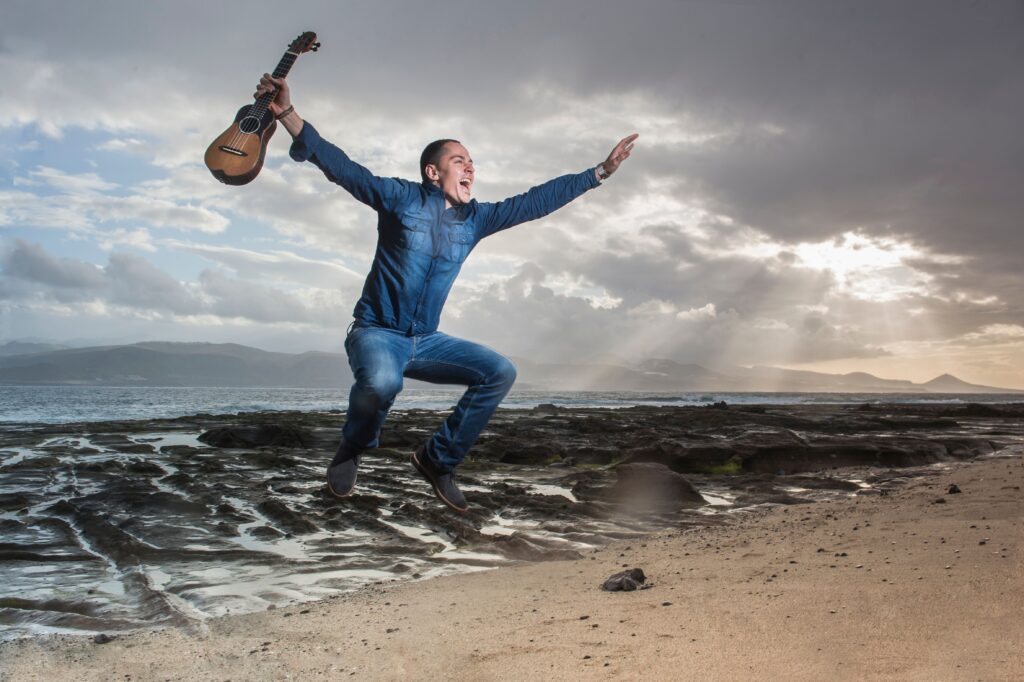
"Collaboration is everything for the music I make."
When do you first remember feeling like you could play music for a living?
Germán López: Around when I was about eighteen years old, I started to compose music. At that time, I was curious to see what would happen if I put together a group that played the music that I wrote and performed it in concert. I remember that I talked about it with my piano teacher, who was also my friend, and that he supported me in that process. In fact, he was our group’s pianist! I wonder what would have happened if I did not have that encouragement from my piano teacher… Anyway, from that moment on, little by little, I started to consider the idea of making a living as a musician. I have always been teaching. Years later, when I was 28, I decided to take the definitive step of trying to live exclusively from music performance. I have a photographic memory and I remember the images in my head of almost all of my performances, so in terms of remembering the feeling of deciding to be a professional musician – of course! This is still a wonderful memory that I savor now.
Much of your recording work focuses on collaboration. Is that a function of your choice of instrument or reflective of your creative mindset?
Collaboration is everything for the music I make. In my duo project, Canela y Limón with Atonio Toledo, our collaboration is the foundation of the energy that drives each concert. Each performance is unique because of our love for the way improvisation can enrich a composition. As a musician, it’s very important to me to have feedback from the musicians I play with. I fully trust the talent of the people I surround myself with and I think that it provides learning and enrichment to me. In the records I have made, and for my recording coming out in June 2022, the musicians who take part always contribute from their point of view and their musicality. No one knows his instrument better than the musician himself, so for me it doesn’t make sense to write an arrangement for a guitarist or a percussionist because I understand that the guitarist in question is going to know how to interpret what the music requires. The important thing is to choose the right musicians for each project.
"Human beings are connected by our emotions."
What is your approach to composition? When you are performing a cover of a well-known song, how do you determine the orchestration?
I think that the more a person is in tune with making music, the easier it is to connect with other people. Human beings are connected by our emotions. Although we live in different places and have different daily lives, we are excited by the same things. The challenge for me as a musician is to adapt music that has not been conceived for a timple to the instrument. The tuning of the timple is very particular, since its lowest string is in the middle. It’s not the same as a guitar or a ukulele. Trying to make music composed for those instruments with the timple is a very challenging learning and creative process for me.
Your new album, set to be released in 2022, finds you signed to a major label. What, if anything, do you feel like you may have to do differently to accommodate stardom?
My new album with Virgin/ Universal Spain will be a new dimension for my music, especially in terms of promotional opportunities, since there are so many important musicians involved in the album with great connection to audiences worldwide. But I am not sure I personally associate with the idea of “stardom” in the way you present it. My work has always been about authenticity. I am simply trying to be the best possible musician of my generation with the instrument I play. With that in mind, I trust that I can go as far as the universe allows me to go.
What advice do you have for a young artist looking to make their start in the modern music world?
I am not sure I feel qualified to give advice because I think I’m still a very young musician! But based on the experience I’ve had, I think the most important thing is to be honest with the feelings you have and with what you like to do. Many times, musicians make music to be successful, music that is going to sell, but that is not always an honest process. I think it’s a mistake because a musician cannot lie. The audience will always know, one way or another. So the advice that I could give to someone who wants to be a musician is to study hard, train a lot, be very serious about your career, but above all else, be very honest. Triumph is staying on track; being a musician in and of itself is a triumph.
Who are some of the artists you look to for artistic and career guidance?
The late Paco de Lucía, who is the most impactful player of flamenco guitar in the world and an incredible musician. He is one of my greatest influences, because of the dimension and international connection that he was able to give to the flamenco guitar. He started from tradition and took the instrument to a dimension never seen before. I also really identify with Pat Metheny, one of my favorite musicians of all time. The timbre of the playing and how each part leads to another creates so much dimension. The concept of jazz guitar really appeals to me. I love how Sting has always surrounded himself with astonishing musicians and combined their skill with pop, which can connect with so many different people. I also feel very identified with Richard Bona, in the way he creates music with reference to traditional West African and Cameroonian music, as well as the way he creates with such optimism. Through his music, I can connect with a culture that is not mine, but still find myself.