

mailing list
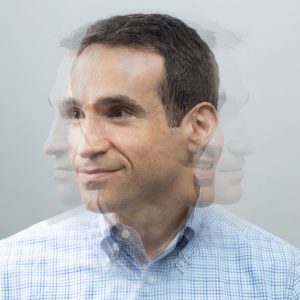
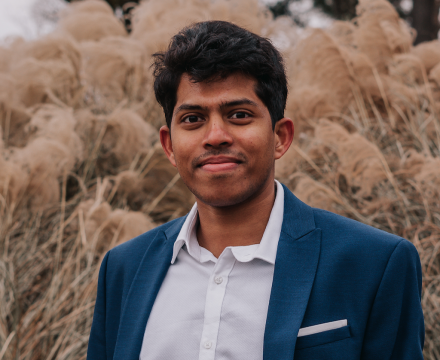
Nir Eyal is an Israeli-born American author, lecturer and investor known for his bestselling book, Hooked: How to Build Habit-Forming Products and Indistractable: How to Control Your Attention and Choose Your Life.
Thank you so much for taking the time to speak with me today! Of course, my pleasure
How are things in Singapore? Good! Really Good, I kind of feel bad that I’m not in New York. Things are great here, the government has been very clear, very direct and very strict, so if you don’t wear a mask, you get a $300 fine on the spot, they don’t mess around here.
That’s something I think they should implement here actually… We’re going to look back historically and think what were we thinking, why did everyone just not wear a mask?
How have you seen research for both of your books come to fruition during the pandemic…So they really cater to two different audiences that may overlap, but don’t necessarily.
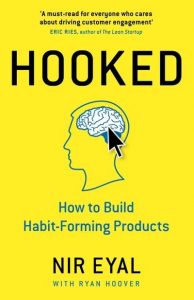
Hooked is really about how to build habit forming products, I work with all kinds of companies who are looking to make their products and services more engaging, companies who are sick of spending tonnes of money on tonnes of advertising, and spammy messaging, and instead want to build the kind of product that people use because they want to, not because they feel like they have to. So, the dream is, what if you could make your product as sticky and engaging as Facebook, Twitter, Instagram, Snapchat, Tik Tok. What if you could borrow from the psychology of design these companies use to make all sorts of products to build healthy habits in peoples’ lives, and the good news is, we can absolutely do that, and that’s what Hooked is all about.
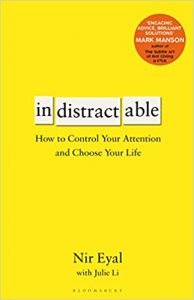
Indistractable is a different side of the coin, so if Hooked is about how do we build good habits, Indistractable is about how do we break the bad habits. Part of the downside of having products that are designed to be engaging is sometimes we find ourselves overusing them, and becoming distracted by some of these products. And so what I wanted to do with Indistractable was so show people how we can get the best of these tools without letting them get the best of us, and how we can overcome all sorts of distractions, not just our tech distractions but there are many many distractions out there so I wanted to systematically go through the literature because there’s so many myths out there about personal productivity and time management, beliefs that really harm people, and myths like to do lists – those are horrible, that’s one of the worst things you can do for your productivity. Research that has since been debunked like the myth of ego depletion, that we run out of will power and many people still believe this, they tell themselves ‘oh I’m spent’ or ‘I have an addictive personality’ or ‘a short attention span’ – there’s just so much myth out there that is really hurting people, and so I wanted to tackle that stuff, and not only in a scientific way, but also in a practical manner. Everything in the book is something in which I applied in my own life.
How has Indistractible become prominent now, in light of people making a shift in the ways they are working, and having to focus…So a couple of things have happened since Covid-19. 1) There are more internal triggers, internal triggers are the root cause of distraction, it’s a desire to escape discomfort. Procrastination, distraction, it’s really all about the desire to feel something else. It’s an emotion regulation problem, it’s not a character flaw, it’s not a personality trait it’s a lack of a certain skill set most of us were never taught, which is, what do you do when you feel bad? Do you look for escape? Do you turn on the news, so you can worry about someone else’s problems, as opposed to having to think about your own problems? Do you take a drink because you don’t feel really good and let’s not feel it anymore by intoxicating ourselves? Lets’ pick up our cell phones, email or Facebook or watch YouTube videos so we don’t have to deal with our present reality, and we see more of that when reality is not a very good place. So, when people find they have more emotional discomfort that they don’t know how to deal with, this can lead them to a vicious cycle. For example, think about the news, many people these days are habitually checking the news and they don’t know why, and the reason why is that they’re scared, they’re uncertain, they’re anxious, they’re stressed, and they have trained themselves, habituated themselves to look for relief to look for discomfort by turning on the TV. Scrolling Twitter, or checking the news online, and of course, that only makes things worse! That just feeds the problem, as opposed to informing us what we can actually do about it, it sends us down this doom loop of more and more information that’s not serving us, and doing nothing but serving the media companies who want us to endlessly click on their articles and watch their TV shows so that they can sell our eye balls to advertisers. That’s what they do for a living, does anybody not know that? That’s their business model, and so when we feel more fear, uncertainty, stress, anxiety, we feel more of these internal triggers, and if we do not know how to deal with these in a healthy way, we will express the need in unhealthy ways.
And so that’s one thing which has changed. More of these internal triggers caused us to look for more distraction, and the second thing that’s happened is that because so many people today are working from home, the structure that we used to have in our day, for many people has gone, and we know that we need structure. People don’t realize that actually structure helps us be our best. Now that we don’t have the routines it really does impede accomplish what we say we will do, and so it’s very strange, it’s a paradox in a way, we have all of this time at home, and we all thought we’d do all of this stuff we’ve been putting off, “I’m going to work out every day” or “I’m going to finish that novel” and yet for many people, in a way, they are doing even less than they did before Covid, even though they have theoretically more time. This is no coincidence, and looking statistically, this is a macro-trend that people today, they feel busier than ever statistically people have more leisure time before Corona than any other modern time in history. That’s funny, why is it that we feel we have less and less time but we statistically have more leisure. Part of it is that we don’t enjoy the time we have for leisure because we feel so hurried that we add more things that don’t even feel like real leisure, and we’re constantly worried about what we still have to do, and a big part of that as well is that we have so much unstructured time. The fact that so many people today are working from home and they don’t have the regular routines in their schedule, is leading to even more distraction, and more regret over how we spend our time frame.
What advice can you share with people with regards to scheduling and structuring their days? We have to realize that you can’t call something a distraction unless you know what it distracted you from. The opposite of distraction is not focus. The opposite of distraction is traction. If you look at the origin of both words, they both come from the same Latin root ‘Traharai’ which means to pull, they both end in the same six letters ‘action’ that spells action, so traction by definition is action that pulls you towards what you plan to do. Things you do with intent, things which are in line with your values, and help you become the person you want to be.
The opposite of traction is distraction. Distraction is any action that pulls you away from what you planned to do, and not in accordance with your values, and moving away from the kind of person that you want to become. And so, this leads us to the fundamental truth, the value between traction and distraction is one word and that one word is forethought, and there’s nothing wrong with playing video games or scrolling social media, or watching the news, there’s nothing bad about those – it’s as long as we do those things on our schedule, and not someone else’s schedule, not based on a media companies schedule, but based on our schedule. So, to answer the question, it really comes down to turning your values into time. If your schedule isn’t planned and you just have plain white space in your day – if you say to yourself “I just need time to be creative” or “I need time to be free” “I don’t want to plan my day” … tough. We have to put in the work deciding what it is we want to do with our time, or don’t complain. If you’re not distracted, and you work out when you say you will and eat really well, if you do everything on your to do list every single day and are fully present with your family, friends and kids, then don’t read my book. But if you find yourself not doing what you say you’re going to do, you’re not as honest with yourself as you are with other people. If you’re sick of living a lie to yourself every day, saying you’re going to do all of these things and then you don’t – this is the solution. This is all backed by research, it’s as simple as planning out what we’re going to do, and when we’re going to do it. Not just the work stuff, the boring stuff, but also the fun stuff! I want you to plan time…if you want to – play video games, go on social media, play with your kids, meditate, go on a walk. Do whatever it is that makes you live in accordance with your values, but plan that time, because if you leave it to you know “when I feel like it” it’s not going to happen, you’ll do things which are not what you intended to do, so the only way to tell the difference between traction and distraction is to plan ahead. Everything that is on your calendar is traction, and everything else is distraction. To get started I built an online calendar tool which is totally free.
Do you recommend scheduling time to be creative? There’s a difference between being an amateur and being a professional, and I’m stealing a bit here from Steven Pressfield talks about how the difference between an amateur and a professional is that a professional schedules time to do their work. Inspiration comes when you put your butt in the chair with planned time to do the work. If you don’t want to be a pro, and you want to paint whenever you want to paint, or write whenever you want to write, that’s fine – you could do that as a hobby! But even as a hobby I would recommend scheduling it, as other things will interrupt. As a professional, your livelihood depends on you scheduling time.
Lets’ go back to humble beginnings – were you always great at scheduling? Noooo! I wrote this book for me. I have no willpower or self-control, I used to be clinically obese. The advice I always got when I watched too much TV or ate too much, was always you should have some more self-control or have some self-discipline, and the research says that’s bunk. People have a system and a process in place so they don’t need any self-control. If you wait until the chocolate cake is on the fork, or until the cigarette is lit you’re going to smoke it. If you sleep with your cell phone next to you on your night stand, that will be the first thing you reach to in the morning, as opposed to saying hello to your loved one – you’ve already lost, it’s too late. If you leave it to willpower and self-control, you will lose! These temptations are way stronger than willpower. The antidote to if forethought, and that’s what I learned and really the mantra of the book. We have to stop telling ourselves these myths “I have an addictive personality” or “easily distracted” or “technology is hijacking your brain” – we tell ourselves those things, and then people believe it and we don’t do anything about it. All we need to do is to know how to plan ahead. By making the right steps today, so we know we don’t get distracted tomorrow. I wrote this book because I struggle with distraction so much, that I found that I was neglecting my daughter, being on my phone too much, not exercising when I said I would, and I got sick of it, and I wrote this book because I wanted to understand the deeper psychology behind it. It took me five years to write this book, because the first four years I was distracted. Everyone should have the power to do what it is they say they’re going to do. What I’m up to right now is spreading the message of helping people become Indistractable, in hope that others will take up this charge, and use it as an identity that they use to describe themselves.
I remember when I was a kid, in the 80s everyone smoked. Even though my parents didn’t smoke, we had ashtrays in the house, because people expected to smoke. Then something changed, people like my parents identified themselves as non-smokers, and began asking people to smoke outside the home, if they wanted to smoke. There wasn’t a law back then saying people couldn’t smoke in households, it took people like my mum saying NO, and identifying it as unhealthy and not in line with my parents’ values. That’s exactly what we need to do when it comes to distraction. That’s why Indistractable sounds like Indistractable. It’s a moniker, an identity, kind of like a super power. I want people to start calling themselves Indistractable so when they see these harmful behaviours that other people are partaking in, they can say yeah, you know what, I do things a little differently, maybe I’m a little weird, don’t respond to every text message in five seconds, I’m not constantly connected to my device, I take time to do what I want to do, and maybe it’s a little different from what most people want to do, but is it any different from someone who wears religious garments or who eats a vegetarian diet, that’s a little different, right. But it takes those types of people, that’s the type of person who helps make society a little better. My hope is we can start this movement of people who can stand up and say I am indistractable.
Do you think during the current climate, people are reassessing their values? I hope so, I don’t know if most people even know what values even are. They know they’re supposed to live their values, but what does that even mean? So, they make these five-year vision boards, but then have no way of getting there and achieving. There’s actually a lot of evidence which shows that even envisioning the future, the outcome you want, such as envisioning what it’s like to feel rich, it turns out the people who envision outcomes become less likely to achieve those outcomes, because psychologically they give themselves the reward without doing the work. In fact, it’s the person who envisions the actions. If you think about the athlete, they don’t necessarily think about winning, they visualize the jump shot, and making the perfect basket – that’s what you should visualize, the actions. If you’re trying to lose weight, don’t visualize how good you look on the beach, instead visualize what do you when you go to that party and someone offers you a slice of chocolate cake, how are you going to respond – that’s the kind of stuff you want to envision, and the same with values. Just think about tomorrow – values are defined as the attribute of the person in which you want to become. The way of turning values into attributes, ask yourself. – How would the person I want to become spend their time? Then we decide how do we spend our time accordingly in order to obtain those attributes of the person in which I want to become. How much time do I spend on myself? How much time do I spend on my relationship? How much time do I spend on my work? Then I book that time in advance to make sure I walk the walk and I don’t just talk the talk.