

mailing list
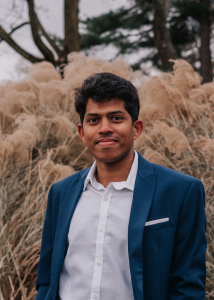
Uttam Grandhi is an elastic mind enthusiast, based in Brooklyn. His interests span, origami, electronics, code, fabrication, and mixed reality. He is an alumni of the Interactive Telecommunications Program at New York University, Vancouver Film School, and Birla Institute of Technology and Science, Pilani, in India. His artworks have been exhibited at venues such as Cartier, MIT, Tokyo University, New York University, Rubin Museum of Art, National Museum of Mathematics, Gulliver’s Gate Miniature Museum, SIGGRAPH, World Maker Faire New York, Internet Yami Ichi, Nagoya University, and Chuck Jones Center for Creativity, among many other national and international venues. He has won recognitions from MIT, Harvard University, and NASA for his inventions in augmented reality, and origami. Most recently, he founded OpenPPE Project in collaboration with researchers from MIT in response to the COVID-19 pandemic, inventing an origami-based, low-cost, N95+ filtration face mask that can easily be replicated anywhere in the world without the need for advanced machinery or skills.
Hello Uttam! Talk to me about your current mood and emotions…Optimistic. Creative. Hopeful.
Tell me a little about the current ‘lotus project’ with the Rubin Museum…The Lotus Effect is a digital, and physical participatory installation for times of transformation. The installation will serve as a community-built symbol of gratitude for the people and things that help us get through difficult moments. The project invites everyone to fold an origami lotus and contribute it to the physical installation once the museum reopens in September. The lotus pictures shared on social media with #TheLotusEffect are also displayed as part of the installation.
How did the project come about? The Rubin Museum wanted to bring people together during the pandemic through a creative and meaningful project which could remind everyone to be resilient and hopeful. With this idea, they reached out to me around early May and I was very glad to have received an opportunity to contribute something positively to the society during the difficult times. I came up with a design for an origami lotus which is simple and easy to fold. By adding more folds, it can also be made into a more detailed origami lotus. Like the birth of a lotus flower, an origami artwork is a transformative process. Where a flat sheet of paper is folded iteratively to create something beautiful! The medium coupled with the symbol of choice, conveys resilience and transformation both literally and metaphorically!
“Dream big. Make goals.
Write as much as you can.”
Let’s’ go back to humble beginnings, talk to me about your journey from birth to where you are now…I’m born in the coastal city of Visakhapatnam, in southern India. The city is filled with local art, culture, landscapes, and beautiful beaches. I was lucky enough to attend St. Aloysius’ Anglo-Indian High School* which faces an ocean! The beauty of my city, the encouragement of my parents, and art teacher, made me actively pursue painting as a hobby until the age of 16. After having won several painting competitions regionally and nationally, I wanted to pursue a degree in Art/Architecture. However, I was also equally drawn to the field of Science. So, I ended up choosing the harder option, Science. I studied Mechanical Engineering and Physics dual degree at one of the top schools in India, Birla Institute of Technology and Science (BITS) – Pilani and developed a fondness for robotics. During my senior year, I created a sketching robot, titled Michelangelo, and a Cyborg sculpture. Both of which won a silver, and a bronze (respectively) for India at the annual ROBOGAMES-2009, San Francisco. Later, I proceeded to do my master’s thesis in Artificial Intelligence, and Machine Learning at one of the top research institutes in India, Indian Institute of Technology (IIT) – Kanpur. Though the experience was very enriching, it was also a little overwhelming (back in 2010) to be surrounded by complex code and mathematics. So, I took a tiny detour and attended Vancouver Film School, Canada to learn character animation. It was a fun and entertaining experience. But coming from a diverse background of Art and Science, the field of animation felt a little restrictive. So, I returned back to India and worked in the field of microfinance for two years in Bangalore, India building visual interfaces for users with limited/no literacy. For the span of two years, I attended many talks, hackathons, and conferences. During one of the TEDx talks at National Institute of Design (NID) – Bangalore, a kind speaker by the name Abhishek Hazra told me about the world of New Media Art and an amazing program called Interactive Telecommunications Program (ITP) at Tisch School of Arts, New York University. I got an admission to ITP in 2013 which brought me to the creative capital of the world, New York City! I would say, my creative career has exploded ever since. The city was kind enough to give me opportunities to work with legends of various fields like the computer artist, Lillian Schwartz (born 1927), American Economist Andrew Caplin, and Director Keath Bearden, to name a few. In the last 7 years, I have done over 200 projects across Augmented Reality, Virtual Reality, Synthetic Biology, Digital Fabrication, Illustration, Electronics, Code, Sculpture, Pop-Up Books, and Origami. Having said that, I’m extremely thankful to the U.S. Govt. for granting me an extraordinary ability visa allowing me to pursue my creative journey for the last couple of years in the land of opportunity, United States of America!
*Fun-fact: St. Aloysius’ Anglo-Indian High School in Visakhapatnam, India was built in 1847 and famous Indian physicist & nobel laureate, Sir C.V. Raman is an alumnus.
Let’s talk about the elasticity of the mind…(I love that term!)…The term elastic mind was coined by Italian architect, and curator, Paola Antonelli in her book, Design and the Elastic Mind which focuses on the ability of designers to grasp momentous advances in technology, science, and social mores and to convert them into useful objects and systems. The very structure of the ITP program has been revelatory. Soon after I joined the program, I realized that identifying myself as someone or something eliminates a lot of possibilities. So, for the last 7 years, it has been my pursuit to maximize such possibilities and participate in as many interdisciplinary projects as possible to retain the elasticity of my mind. Sometimes this could lead to difficult situations too. In my second year at ITP, I consciously chose Recurring Concepts in Art, taught by Georgia Krantz and Designing Assistive Technology in the same semester to see how well my mind can adapt to those fields. I must confess, a visit to United Cerebral Palsy in Midtown followed by an artistic discussion about Zhang Huan’s, “95kg” performance art was emotionally very draining.
Why is it important for you to work on multiple projects at one time, of varying genre? When I was young, I studied various topics in school, and I was effortlessly creative in my methods and thinking. But as I grew older, I noticed, traditional academic and professional systems discouraged explorations and experimentation. So, I felt doing multiple diverse projects concurrently is one way of keeping my mind elastic.
Do you feel completely free to create the work that you desire? No. I think my conservative background limits me in exploring certain topics of taboo.

What has been a pivotal moment(s) in your career? Winning two medals for India at ROBOGAMES in 2009. It was my first international prize and I received national recognition.
What’s your favorite part of the process? The “figuring out” is my favorite part of the process.
Do you incorporate technology within your work, in what way? Yes. Sometimes I do. Eg: All of the window displays I did for luxury clients on 5th avenue, contained technology like, LEDs, motors, electronics, code, and video. My augmented reality and virtual reality artworks inherently involve technology. As digital devices like a phone or a headset are essential in experiencing the artwork. My kinetic pieces, like Michelangelo (sketching robot), contained motors, electronics, and code.
What emotions do you aim to evoke when people experience your work? When people encounter my art, I would like it to evoke, wonder, happiness, and surprise in them.
“…She is 94 now and still makes art every day.
She is a reminder for me to be relentless,
and constantly create something!”
Who’s your biggest influence? Artist Lillian Schwartz (b. 1927). She is a pioneer in computer generated art and worked with many scientists and inventors at AT&T Bell Labs for 33 years. She is 94 now and still makes art every day. She is a reminder for me to be relentless, and constantly create something! On seeing the little origami turtle I folded for her 87th birthday, She introduced me to her friend Kyoko Kondo (who is a close associate of Lillian Oppenheimer). From there, my origami career kicked off! I got to meet many amazing origami artists, educators, and scientists in the last couple of years and I’ll always be indebted to her.
How do you get into your creative flow? I’d like to take inspiration from anything and everything (mythology, language, technology, dreams,…). It’s hard to tell what prompts me to make a piece of art. I’m mostly creative during the night and many of my artworks are created while the world is asleep.
Talk to me about feeling ‘stuck’ – does this ever happen to you? Of course! There are numerous occasions when I’m ‘stuck’ or couldn’t figure out a resolution. Whether it be artistic or technical. I usually reach out to my parents for advice and more often than not, I figure out a solution in the process of explaining my problem to them. I think it’s because, when I try to explain my problem by breaking it down into simpler terms, I understand it better. Also, in some cases, “sleeping” on a problem gives me a solution!
What do you foresee for the future for the creative industries? Technologies like AI, Machine Learning, AR/VR will become an integral part of the art making process. Maybe Da Vinci, Shakespeare and Einstein would be brought back to life through simulation and their holograms would create something unimaginable!
What can we expect to see from you in the coming year? Origami Inspired Furniture, Virtual Reality training modules for Dentistry, and a Pop-Up Book inspired by the 5 natural elements among other projects.

When was your first major commission/special project? I got an opportunity to make architectural sculptures for the World Monuments Fund’s (WMF) Hadrian Gala in 2015. The event was graced by Her Highness Queen Sophia of Spain and Her Excellency Shaikha Mai bint Mohammed Al Khalifa of Bahrain. My friend Wesley Damgo from Origami Meetup Group (OMG) – NYC introduced me to her boss, Susan Miller Smith, who was an event designer for WMF for many years. Susan saw my work and gave me a special project of making 15 miniature Fuwangge pavilions from the Chinese Forbidden City in wood. All the sculptures were sold by WMF to the Royals, and Billionaire attendees for an undisclosed amount.
What advice can you offer other artists regarding making their practice profitable? Explore. Find a niche. Practice every day. In the age of social media, with companies like Youtube/Patreon/Etsy/Amazon,etc., there are numerous opportunities for artists to make their practice profitable.
What’s the most interesting fact that you discovered recently? That you can make a crystal radio with a credit card!
What’s your philosophy for life? For a happy life, you need to achieve balance between your “wants” and “needs”. Inner peace and health are more important than anything else.
What advice would you give to your younger self? Dream big. Make goals. Write as much as you can. Realize every word you speak, and every action you take has a specific effect on the space and people around you.
Tell me about your biggest failure, and what you learned from that failure? I think my biggest failure yet is not being able to form a regimen. I really admire creative people who can follow a routine to produce artwork and it will be a continuous effort for me to reach that goal.
What does success look like for you? Being able to inspire others with my work and story. Owning a studio/workshop for myself where I’m able to experiment with various mediums like wood, clay, glass, metal, paper, electronics, code, mixed reality, micro-organisms, neon, etc.
What do you want to be known for? I want to be known for pushing the boundaries of interdisciplinary art.
What book recommendation can you share with readers? I would like to recommend “The 4-hour work week” by Timothy Ferriss. It has brilliant ideas on how to live life to the fullest in the 21st century.
Learn more about Uttam >