

mailing list
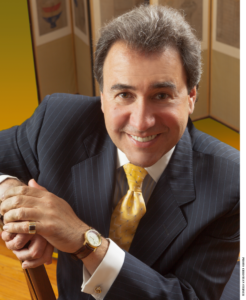
Michael Capasso is the General Director of the New York City Opera. He has produced, directed, and toured opera and musical theater productions in the U.S. and abroad for over 30 years. In June of 2014, he led the successful effort to bring the New York City Opera out of bankruptcy. The revitalized New York City Opera returned to the stage in January 2016 with a celebratory production of Tosca. In 1981, he, along with Diane Martindale, founded New York’s Dicapo Opera Theatre. Over the 30 years of his leadership, Dicapo Opera Theater presented diverse programming to the New York public. In addition to his work with the Dicapo Opera Theatre, Mr. Capasso has directed operas at l’Opéra de Montréal; Mallorca Opera; Toledo Opera; Connecticut Opera; New Jersey State Opera; Opera Carolina; and Orlando Opera among others. Mr. Capasso founded the National Lyric Opera in 1991, a touring company that has brought fully staged operas to communities in the American Northeast.
Since its founding in 1943 by Mayor Fiorello La Guardia as “The People’s Opera,” New York City Opera (NYCO) has been a critical part of the city’s cultural life. During its history, New York City Opera launched the careers of dozens of major artists and presented engaging productions of both mainstream and unusual operas alongside commissions and regional premieres. The result was a uniquely American opera company of international stature.

For more than seven decades, New York City Opera has maintained a distinct identity, adhering to its unique mission: affordable ticket prices, a devotion to American works, English-language performances, the promotion of up-and-coming American singers, and seasons of accessible, vibrant and compelling productions intended to introduce new audiences to the art form. New York City Opera has a long history of inclusion and diversity. It was the first major opera company to feature African American singers in leading roles (Todd Duncan as Tonio in Pagliacci, 1945; Camilla Williams in the title role in Madama Butterfly, 1946); the first to produce a new work by an African- American composer (William Grant Still, Troubled Island, 1949); and the first to have an African- American conductor lead its orchestra (Everett Lee, 1955).
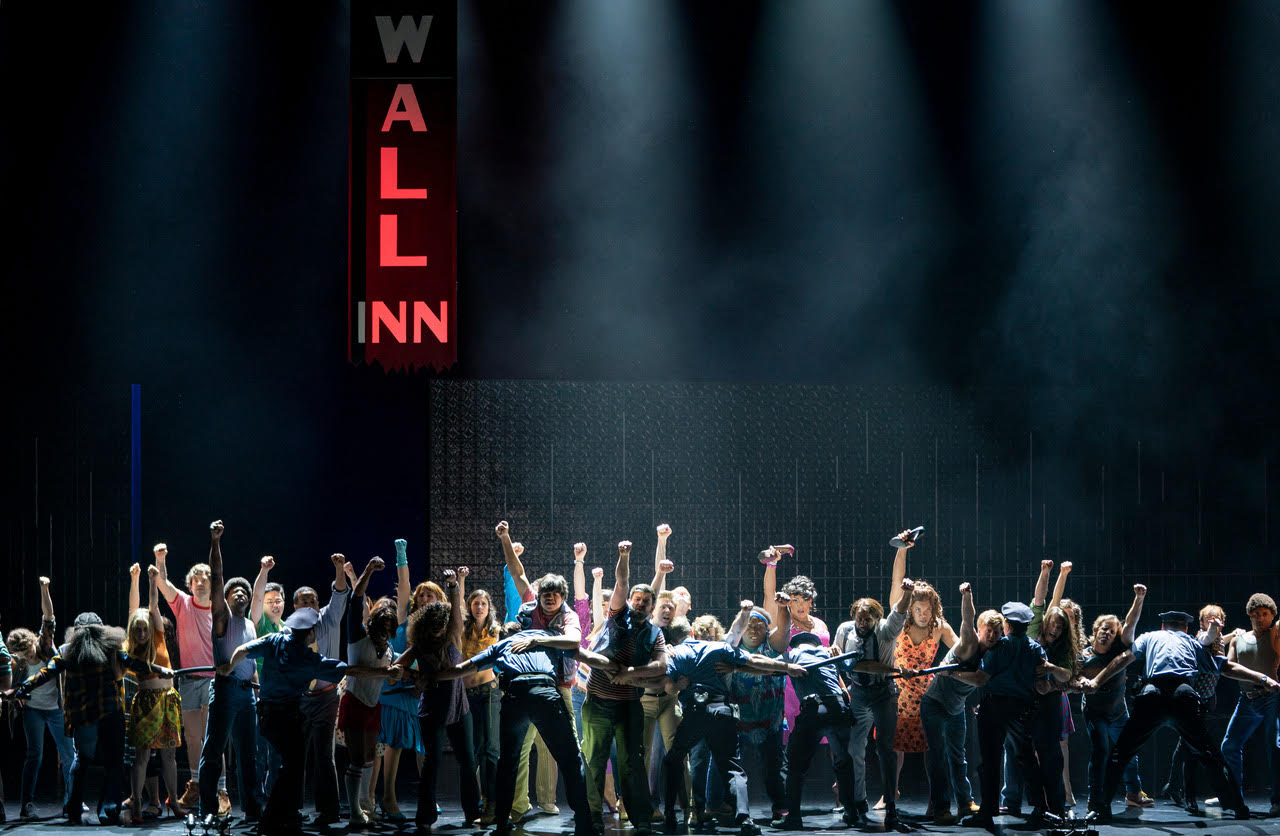
A revitalized City Opera re-opened in January 2016 with Tosca, the opera that originally launched the company in 1944. Outstanding productions during the four years since then include: the world premieres of Iain Bell and Mark Campbell’s Stonewall, which NYCO commissioned and developed, legendary director Harold Prince’s new production of Bernstein’s Candide; Puccini’s beloved La Fanciulla del West; and the New York premiere of Daniel Catán’s Florencia en el Amazonas — the first in its Ópera en Español series. In addition to the world premiere of Stonewall, the productions in NYCO’s Pride Initiative, which produces an LGBTQ-themed work each June during Pride Month, include the New York premiere of Péter Eötvös’s Angels in America and the American premiere of Charles Wuorinen’s Brokeback Mountain.
New York City Opera continues its legacy with main stage performances at Jazz at Lincoln Center’s Rose Theater and with revitalized outreach and education programs at venues throughout the city, designed to welcome and inspire a new generation of opera audiences. City Opera’s acclaimed summer series in Bryant Park brings free performances to thousands of New Yorkers and visitors every year.
When you say that New York City Opera is “the opera of the people,” what does that mean?
Mayor LaGuardia founded the company in 1943 as “the people’s opera.” His feeling was that the Met was elitist and expensive and he wanted a high quality alternative for “the people.” We strive to maintain the example he set with that tradition.
What are the daily tasks of a General Director? How do you spend your days?
Sadly, the majority of my time is spent fundraising…. begging, really. Whenever I’m not doing that, I am in constant touch with our Director of Production about current and future plans for upcoming and current productions. Between stage management and myself we have to keep an eye on all things, but my focus has to be about the money that keeps the company going. It’s good work as long as I don’t look too closely at the bank balance!
How did your relationship with New York City Opera and Bryant Park begin? How has it developed over the years?
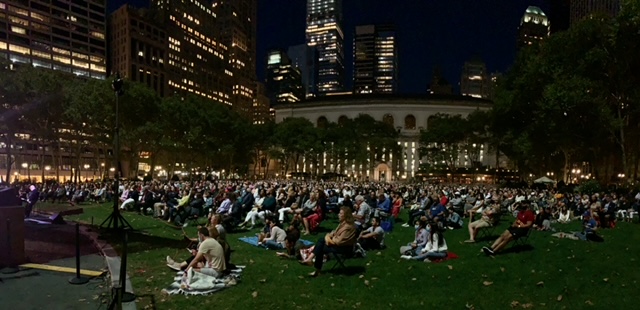
The relationship preceded my administration and tapered out well before I arrived at the organization. Part of my leadership approach was putting a real emphasis on the presumption that the people’s opera should always bring opera to the people and that performance should always be free. There are a limited number of performance spaces that can comfortably and stylishly serve the size of a crowd that comes out to our programs and Bryant Park was at the top of the list. We resumed the lost partnership in 2016 and I don’t mind telling you that we (and our audiences) have been thrilled with it. The team at the Park are amazing and help us thrill thousands of New Yorkers every year with some of the best opera the city has to offer.
Do you think opera is still relevant to today’s audiences?
Absolutely. I firmly believe opera is still the greatest form of art you can experience and our audiences certainly seem to agree. Giving people a free point of entry is a key toward creating new ticket buyers. All it takes is one show. The stories, when told well and sung at the highest level, always resonate. They’re tales of love, passion and (sometimes) murder, presented with intensity by some of the world’s best voices. What’s not to like?
How do you find it needs to be presented to best engage with people?
It needs to be good. Period. Opera isn’t difficult to enjoy when it’s performed right.
Who are some of the younger stars of your company?
We have had dozens of young artists that began with City Opera who have gone on to great careers, including any number of the greatest artists in the genre’s history: Placido Domingo, Jose Carreras, Samuel Ramey, Renée Fleming and, perhaps the brightest of all time, Beverly Sills. In my time with the company, we have provided an opportunity for many wonderful artists who have since gone on to become international stars: Latonia Moore, Won Whi Choi, Kristin Sampson, Elizabeth Caballero, Brandie Sutton, and many, many more!
What are the company’s goals for the future?
We are New York’s opera company which means we are here to represent everything New York is. We are the only opera company in the world to consistently produce programming during Pride Month in June explicitly dedicated to the LGBTQIA+ community. Diversity in casting and programming has been a hallmark of the company’s work since the 1940’s. From the beginning to today, we have always produced groundbreaking runs, both of standard repertory with a unique twist alongside new and challenging American work. That is our past and it will be our future.
What productions are upcoming with New York City Opera, both in Bryant Park and in the rest of the upcoming year?
We have two forthcoming free shows at Bryant Park. Both are one-night-only events, starting at 7:00pm. We’ll have a full costumed cast onstage with a small live orchestra performing alongside these abridged operas. On Friday, August 12, the company will perform an abridged adaptation of Verdi’s classic La Traviata, the piece that inspired the musical Moulin Rouge. Soprano Ekaterina Siurina and tenor Charles Castronovo will appear with Michael Chioldi, world-renowned baritone, with City Opera Music Director Maestro Constantine Orbelian at the helm. On Friday, September 2, New York City Opera will present Lucia di Lammermoor; think Romeo and Juliet, but set in Scotland. Donizetti’s brilliant score is the height of drama and the pinnacle of the Bel Canto style. This abridged version stars world-renowned soprano Sarah Coburn and will be conducted by Constantine Orbelian.
The full 2022-2023 season will be announced later in August, in the meantime, more information here >