

mailing list
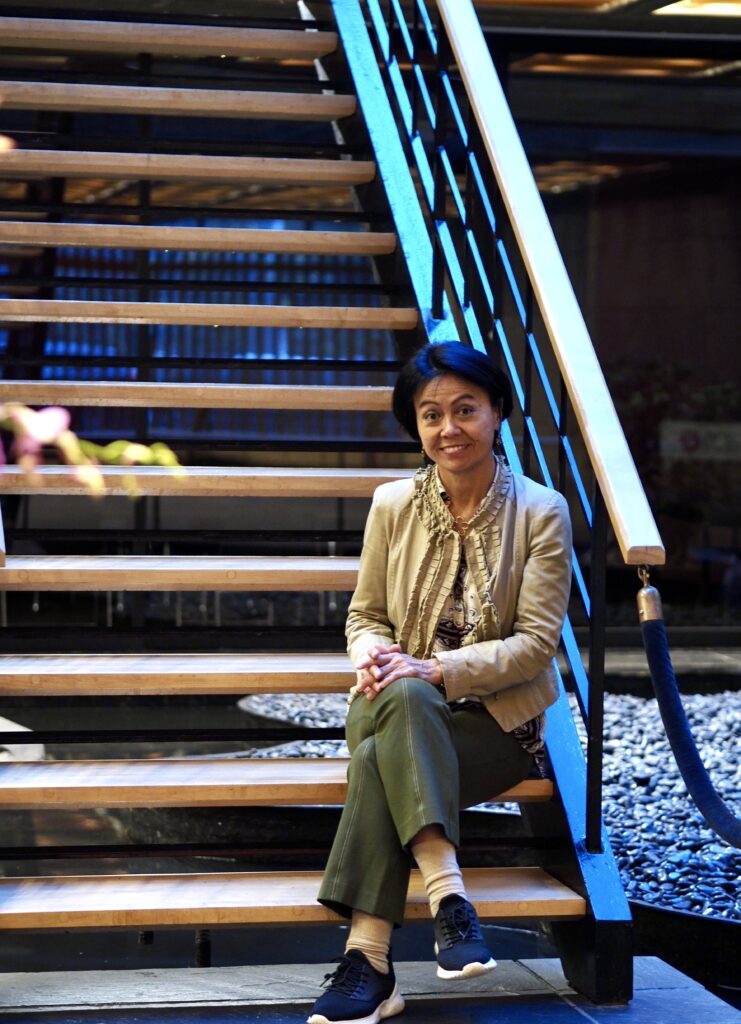
Yoko Shioya became Artistic Director of Japan Society (JS) in 2006, overseeing JS’s Performing Arts and Film departments. Since assuming the position of Director of Performing Arts in 2003, she has enlarged the scale and number of commissions for the creation of new works related to Japanese culture by non-Japanese artists and increased the number of tours of Society-produced works throughout North America. Shioya also launched new initiatives, including co-producing commissioned work by international artists with presenting organizations in Japan, presenting works from East Asian countries and establishing artists’ residency projects in New York City. Known in Japan as a writer/researcher on the public and private arts support systems in the U.S. and Japan, Shioya has been invited to speak at numerous symposia, lectures, and TV programs presented by the Agency for Cultural Affairs of the Japanese government, Keidanren, the Academy of Cultural Economics and the Japan Council of Performers’ Organizations, among others. She has been a regular contributor to arts columns on performing arts and exhibitions for the Asahi newspaper, and has served as a committee member and selection panelist for numerous programs, including The Herb Alpert Award in the Arts, The Bessie Awards, Rolex Mentor and Protege International Program, and the Toyota Choreography Awards. She received the 2019 Bessies Presenter Award for Outstanding Curating. Shioya holds BAs in musicology and dance history from Tokyo University of the Arts.
Japan Society is the premier organization connecting Japanese arts, culture, business, and society with audiences in New York and around the world. Japan Society connects American and Japanese people, cultures and societies through a global lens. We are committed to telling the story of Japan while strengthening connections within New York City and building new bridges beyond. In over 100 years of work, we’ve inspired generations by establishing ourselves as pioneers in supporting international exchanges in arts and culture, business and policy, as well as education between Japan and the United States. Now, more than ever, we strive to convene important conversations on topics that bind our two countries together in a global context, champion the next generation of innovative creators, promote mutual understanding and serve as a trusted guide for people everywhere who seek to more fully appreciate the rich complexities and abundance of Japan. From our New York headquarters, a landmark building designed by architect Junzo Yoshimura that opened to the public in 1971, we look forward to our future which can only be enhanced by learning from our peers and engaging with our audiences, both near and far.
What about the position of Artistic Director at Japan Society first attracted you?
Since the establishment of the Performing Arts Program at Japan Society (JS), way back in 1953, all my predecessors were Americans whose first language was English, so I would (perhaps strangely) be the first Performing Arts Director whose mother tongue is Japanese. When I joined the organization, I had been living in New York City for over 15 years, so while I hadn’t exactly “gone native,” I certainly thought the experience would give me the vision to provide stronger programming – especially in language-driven areas such as contemporary theater and Japanese traditional performing arts – from an angle that would better resonate with American audiences. The success of the program over the past two decades suggests I might have been right!
"the first Performing Arts Director whose mother tongue is Japanese"
What was your vision of the Japan Society performing arts program when you joined the staff and how has that changed since you’ve been there?
Japan Society’s core mission is to introduce the more nuanced aspects of Japanese culture to American people in service of building better mutual understanding. I believed then and now that the best way to satisfy that mission is to focus not on one or two forms of artistic expression, but rather to explore all of the performing arts: theater, dance, music,performance art; all in their traditional folkloric forms and their modern manifestations. My academic background is in music but dance is always in the center of my heart. Over the years, I had built up a vast network of contacts in the traditional arts community, starting when I was back in college in Tokyo. That community, my Japanese language skill and my constant curiosity left me confident to tackle any project.
In the years since, that view has not been changed, only expanded. One aspect that’s become more important to me is our practice of commissioning non-Japanese artists to create Japan-related new work. These events might spring from Japanese novels, traditional techniques of ancient form, collaborating with Japanese artists, composing for Japanese instruments and so on. When we make these connections with non-Japanese creators, the artists we engage with almost always become powerful spokespeople and advocates for Japanese culture. Their perspective provides unique insight.
"We constantly collaborate with local cultural organizations"
Since you’ve joined Japan Society, what differences over time have you noticed in the way that American viewers respond to your programming?
Technology has really changed the playing field. In the early 21st century, there was no streaming of movies and even downloading a low-resolution film could take days. With no smartphones, coordinating a short video shoot required a full team of professionals. Without those means of communication and media coordination, anyone interested in engaging with Japanese culture was drastically limited by the sheer geographical distance between America and Japan. Japan Society’s dedication, our specialization in that culture, the powerful business and creative networks we had in place based on longevity of experience, and the regularity with which our staff went back and forth from country to country gave us a tremendous advantage. We were able to provide a current and immediate look into what was happening in Japan in a way no other organization in New York could. In our modern world, that’s no longer the case. Our audience has also become much more sophisticated and knowledgeable; in many instances, they were raised on Japanese movies, television, fashion and food. This audience is seeking authenticity of a different variety. So our challenge is to meet more complex expectations, to provide new and inspiring culture that would be fresh and exciting to even a contemporary indigenous Japanese audience.
How have you worked to build a sustainable local audience?
We constantly collaborate with local cultural organizations to co-present, co-commission and cross-promote our programming. We also find innovative ways to engage New Yorkers by providing educational activities in local schools, in community centers or at special events. Keeping this outreach constant and consistent throughout this season (and every season!) has enabled us to not just maintain but also expand our audience.
What is the current state of the performance art scene in Japan?
Because Japan’s government policy on COVID has been fluctuating and obscurely regulated, it is difficult to articulate how it has impacted the culture. Let’s take Japan’s regulation on theater’s capacity as an example. Much as in America, there has been a transition between “limited capacity” back to “full capacity” many times, not in a linear fashion and not without unreasonable exceptions. The vogue in online programs has been helpful but I know of many live performances that found a way to come to completion even after COVID. Perhaps the most damage was done to any work that involved collaborative creation, especially since the government has banned “foreigners” from entering Japan over the past 12 months.
With an entire country to choose from, what are the qualifications you look for when bringing an artist to play a show in New York City?
It’s a combination of an array of criteria. Depending on genre, timing, balance of year-round programming, physical scale of the production, budget, name recognition and potential sponsors, booking a program can either be a simple choice or require dozens of meetings. To oversimplify it, we are looking for artists that are recognized for their artistic quality. Japanese commercial success is welcome but not required! We want artists who are highly-acclaimed elsewhere but lesser known in America. They must be ready to take on the challenge of finding an international audience, especially if the nature of their work is underrepresented or unknown stateside. The hope is that their art is unique, that it presents as inherently Japanese at its core but that it has a pathway to resonate with American audiences.
Do you ever worry about differences in cultural understanding by Japanese artists playing in an American setting?
Sometimes, yes; especially when productions explore human sexuality, as the Japanese standard of what’s acceptable is often much more open and tolerant than America’s. I trust my own tastes but I always select works that are intended for local audiences. Fortunately, we have never received any complaints or overstepped the audience’s ability to accept what we’re offering. Especially for any project for which I plan to produce and organize an American tour, I will consult with my peers to discuss the potential of risk and that does a good job of stopping problems before they start. Beyond content, we sometimes need to add subtitles or edit the names of programs but the most common change we have to make is to shorten productions to fit American audience’s attention spans. In Japan, we are accustomed to sitting still for much longer than you are!
When you’re not at Japan Society, where do you like to go to experience performing arts or go out to eat?
I go everywhere! I love downtown theater, experimental performance venues and small clubs, but I also go to Carnegie Hall and the Metropolitan Opera and Lincoln Center… though I will admit that it’s rare to see me at a commercial theater on Broadway. My favorite restaurant is Smörgås Chef at Scandinavia House, which is only a few blocks away from my apartment but, even before COVID, eating out has always been quite a lower priority in my life in comparison to seeing live performances.
What sort of suggestions would you give to a young woman who wanted to work as a performing arts programmer in today’s environment?
You have to go out to see as many shows and as many different types of shows as possible. Try everything! Also, I would recommend leaving your significant other and friends behind and just go by yourself. It’s an opportunity to focus more on what you have seen and to keep thinking about it long after you’re out of the theater.