

mailing list
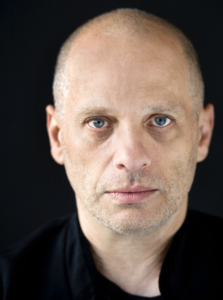
In response to Japan Society’s commission for a new chamber opera, Pulitzer Prize-winning composer David Lang combined and reimagined three texts by iconic Japanese novelist Ryunosuke Akutagawa. The result is the stunning and haunting monodrama, note to a friend, which will stage its world premiere at Japan Society on January 12 through January 15 as part of PROTOTYPE Festival 2023.
note to a friend addresses the eternal human fascination with death, love, family and suicide. Theater luminary Yoshi Oida, Paris-based opera director and longtime member of Peter Brook’s international theater company, directs this world premiere for the legendary New York vocalist Theo Bleckmann. Tokyo Bunka Kaikan in Japan, co-producer of this production, selects the featured string quartet members.
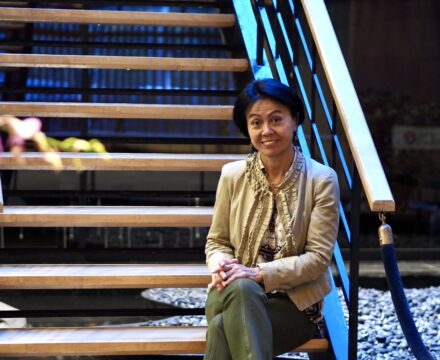
For this exclusive Hatchers interview, Japan Society’s Artistic Director Yoko Shioya spoke one-on-one with Mr Lang to discuss this new work, his inspirations, and the history of his storied career.
David Lang is one of the most highly esteemed and performed American composers writing today. His works have been performed around the world in most of the great concert halls. Lang’s simple song #3, written as part of his score for Paolo Sorrentino’s acclaimed film YOUTH, received many awards nominations in 2016, including the Academy Award and Golden Globe. Lang is a Professor of Music Composition at the Yale School of Music and is Artist in Residence at the Institute for Advanced Study in Princeton. He is co-founder and co-artistic director of New York’s legendary music collective Bang on a Can.
Lang’s opera prisoner of the state (with libretto by Lang) was co-commissioned by the New York Philharmonic, Rotterdam’s de Doelen Concert Hall, London’s Barbican Centre, Barcelona’s l’Auditori, Bochum Symphony Orchestra, and Bruges’s Concertgebouw, and premiered June 2019 in New York, conducted by Jaap van Zweden. prisoner of the state received its UK premiere in January 2020 with the BBC Symphony, European premieres are rescheduled for 2022-2023. New works for 2021-2022 include sun-centered for the Tallis Scholars — to be interwoven with Antoine Brumel’s monumental Renaissance mass for 12 voices Missa Et ecce terræ motus (“and the Earth moved”); a new evening-length work for Pam Tanowitz Dance, created as part of the dance work Song of Songs; and an evening-length work for the chamber ensemble Eighth Blackbird, composition as explanation.
Yoko Shioya: The current opera you’re writing for Japan Society was inspired by short stories (well, suicide notes) written by Ryunosuke Akutagawa, and your previous opera, “the loser,” was inspired by a novel by the same title that you read 25 years ago. Do you often find yourself turning to the written word for inspiration, and what is it about literature that lends itself so well to being an inspiration for musical compositions? What do you think of this cross-pollination between the arts?
David Lang: One might begin to wonder about me, that I wrote an opera based on Thomas Bernhard’s novel ‘The Loser’ and then followed it with an opera based on Ryunosuke Akutagawa’s suicide note ‘Note to a Certain Friend.’ Two operas about erudite, educated, successful men contemplating what it means to kill themselves, both scored for solo singer and 4 musicians. I am a happy, reasonably well-adjusted person, but for some reason I am drawn to these narratives, in which people question themselves so deeply and so completely that their very existence becomes a challenge to them. In my real life, I would be terrified to push my own personal self examination so hard or so far. Literature or opera can become safer spaces in which to follow all hard questions to their still harder conclusions.
That said, the two operas are very different, because the two characters are very different. In ‘The Loser’ the man is a bit of a coward, someone who lives by not being honest with us or with himself about who he is. In ‘Note to a Friend’ the man is telling us, confidently and clearly, why he decided to kill himself, and what that decision has taught him. The characters are different and so their stories and their music ends up in very different places.
Because literature is a testing ground for ideas that we may be curious about but are unable or unwilling to enact in the real world, I find it a very liberating and provocative place to spend a lot of my time. To be honest, I spend much more time reading than I do listening to music these days.
Literature or opera can become safer spaces in which to follow all hard questions
YS: Why do you find your process to be so structured and concept-based? What influenced that way of thinking of/conceiving your commissions/projects?
DL: Being a composer is a commitment to spending a lot of time by yourself. The work is time consuming and you have to shut yourself up in the studio for long periods of time in order to do it. For some people that is a kind of curse, that you are alone all the time. For me, it has become a real gift, in which I can concentrate all my energies on examining closely the things I really like and micromanaging how to get more of those into a piece. What that has meant to me is that I am spending more and more time thinking about what a piece of music could be, long before I even think about what notes it needs or what instruments should play it. And that means that I am spending more time conceptually on what music can do. I never was the kind of musician who would just sit at the piano and play a nice melody – I always have to know in advance what a piece is trying to accomplish before I can think of a single musical sound.
YS: As a teacher at Yale, do you ever find the compositions of your students influencing or changing how you conceive of your work? Furthermore, are you seeing any trends in the next generation regarding their way of viewing the music world versus your own generation?
DL: I love teaching and I love my students. Because I am so interested in the concepts behind a piece of music, I almost always can find something in a student’s work that reveals the world beneath it, beneath the notes and harmonies and instruments. And I really enjoy trying to get them to see that world as well. I wouldn’t say that my students’ music influences me but I get so happy talking about music – to anyone who will listen! – that I come out of my lessons supercharged with energy for my own work.
YS: Why did you start Bang on a Can? What was it trying to accomplish then, and what do you see as its purpose now?
DL: I started Bang on a Can in 1987 with my two best friends, Michael Gordon and Julia Wolfe, when I was in my thirties. We started it for a very simple reason – there were things we thought should happen in the music world that weren’t happening. We thought that experimental music should play a bigger role in the musical universe, that new audiences could be created to appreciate it, that all composers and musicians should be respected and supported, and that all composers and musicians should respect and support each other. 35 years later, we are still hard at work! I will say that one of my favorite things that we do is our summer music festival at Mass MoCA – every summer 45 young musicians and composers from around the globe come to the Berkshires and make music with a faculty of dedicated, powerhouse, experimental musicians. It is a little utopia, every summer.
YS: It has been said that your music is becoming more refined and pure in your career progression, but I’d like to hear how you see it; If you have noticed any changes or not, and what may have prompted those changes?
DL: I do feel that my music is getting simpler, and sparser, and more refined. Part of this I am sure is because I am on some kind of conceptual quest, to identify, as clearly as I can, the things in me that make me feel most emotionally satisfied, and then to try to access those things as efficiently as possible. And I am sure some of it is just getting older. I mean, who has the energy to write so many notes, anymore?
Learn more about Japan Society >