

mailing list

Alan Lightman is a novelist, essayist, physicist, and educator. Currently, he is Professor of the Practice of the Humanities at the Massachusetts Institute of Technology (MIT).
I enjoyed your recent article for The Atlantic, as a society, how do we accept the ideal of slowing down? The pace of life has life is tied to the time equals money equation. Since the Industrial Revolution, efficiency and productivity in the workplace have been increasing. That trend has accelerated hugely with new fast communication devices. The increased productivity, in turn, has made each hour more valuable for its commercial uses, thus decreasing the amount of time for leisure and quiet reflection and increasing the general pace of life. In order to slow down our lives, we first need to recognize the problems caused by our fast living, place value in quiet reflection, and then free ourselves from the obsession of making as much money as we can. Most of us in first world countries can live on much less. We need to value spiritual prosperity as much as material prosperity.
I’ve found words from yourself, Alan Watts and Pema Chodron comforting during this time. What have you been reading? I also have been reading Pema Chodron. I am also re-reading Rilke’s “Letters to a Young Poet,” a wonderful little book about what it means to be an artist.
Within your books you discuss Buddhist ideals, as a society, could we adopt a Buddhist mentality to life and death? Why do we fear death? Buddhism recognizes that everything is impermanent. Houses, trees, our own bodies, even the stars. So that is one way of accepting the “naturalness” of our own impending deaths. Also, we need to realize that existing life must make room for new life. The world is constantly replenishing itself. If no one ever died, and the population just increased without limit, we would run out of resources. There is a chapter of my book Einstein’s Dreams that discusses a world in which people live forever. It is not pleasant sight.
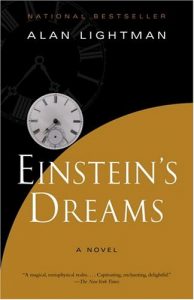
Tell me about your journey to becoming a physicist and writer? From a young age, I was interested in both the sciences and the arts. I built rockets and also wrote poetry. There is much more discussion of these dual interests in my memoir Screening Room. I spent most of my time working in physics until I was about 40 years old. That is old age for a theoretical physicist. But I had been writing all along. After I turned 40, I began doing less physics and spending more time writing. But I was passionate about both from a young age.
In what way is the concept of ‘play’ important to you? Play is when we unleash our inner selves, let go of our inhibitions, invent.
Do you ever feel ‘stuck’? If so, what do you do to overcome this? Actually, being stuck is part of the creative process. When you are stuck on a problem – if you have done your homework and have a “prepared mind,” our unconscious roams around and finds new ways to look at a problem. Many of the great discoveries in science have occurred after the scientist was stuck, as discussed in my book The Discoveries.
What’s your philosophy for life? Do unto others as you would have them do unto you. And, try to make the world a better place.
Why is ‘wasting time’ important? Replenishment of the mind, more creativity, nourishment of the inner self.
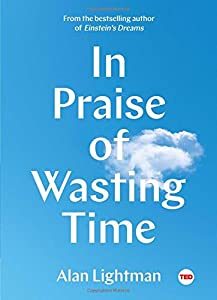
Tell me about your biggest failure, and what did you learn from that failure? My biggest failure occurred in the mid 1980s when I tried to convince the Smithsonian to open a new program in Science and Culture. I learned that I was not very good at working within large bureaucracies and much better at starting things on my own.
It’s the year 2030, what does the future look like – for you, your work, and for the entire world…In recent years, populism, extreme nationalism, isolationism and dictatorship have risen in the world. I hope that these destructive trends will be squashed and we can return to more a more democratic, inclusive world.