

mailing list

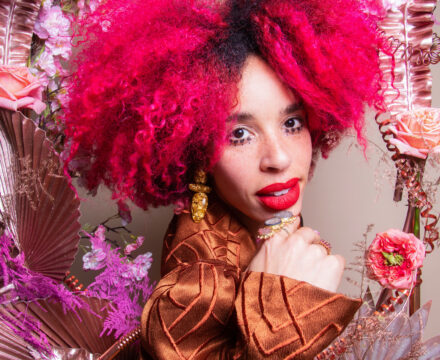
Tiffany Rea-Fisher is the Executive Artistic Director of EMERGE125 dance company, a Black female-led hub for dance performance, creation, and education. The organization operates dual homes in Harlem and Lake Placid, New York, while serving audiences both locally and around the world. EMERGE125 has established itself as a leader by setting new standards for dancer care; creating innovative, cross-disciplinary collaborations with leading artists; and using movement as a catalyst for community building: expanding the reach, purpose, and impact of the art of dance. From community dance classes to stadiums filled with thousands of spectators, EMERGE125 demonstrates that modern dance can be accessible and relatable to people of all ages and socioeconomic backgrounds.
Rea-Fisher is a National Dance Project Award winner, 2021 Toulmin Creator, 2022 Toulmin Fellow, a John Brown Spirit award recipient and was awarded a citation from the City of New York for her cultural contributions. As a choreographer, she has had the pleasure of creating numerous pieces for her company as well as being commissioned by Dance Theater of Harlem, Dallas Black Dance Theater, NYC Department of Transportation, Utah Repertory Theater, The National Gallery of Art in D.C., and having her work performed for the Duke and Duchess of Luxembourg. Her works have been seen on many stages including the Joyce, the Apollo, Joe’s Pub, Aaron Davis Hall, National Sawdust, and New York Live Arts. Rea-Fisher was the first Dance Curator at the interdisciplinary arts organization The Tank where she now sits on their Board of Trustees. She curates the Bryant Park Dance Summer Series, providing free art access to thousands while exposing upcoming and established artists to a wider audience.
How did you first find yourself drawn to dance? When was the moment you knew that it would be your vocation?
I’ve been dancing since I was three. It all started when my mom saw me jumping along to music videos on television and sent me to classes not long after. I’ve always been very active and was a busy kid. I played sports and was in choir, but over my formative years it was only dance that stayed constant.
Funny thing: it likely wasn’t until fairly late into my dance career that I realized, “Hey, this IS a career!” For a very long time, I saw my work as more of a hobby. I had never seen the experience of being a professional dancer modeled for me so I didn’t really know how to identify in that way. It was probably my third paid production before I noticed I was making my living dancing. After that, I stopped doubting and started sending the art all of my focus.
What qualities do you strive for to set your work apart ?
I consider my signature to be a combination of empathy, joy, and athleticism; not always in that order. An idea that I’ve always held as true is that people primarily go to the theater to escape, so I ask myself if I wanted to escape, what would I want to see? Empathy, joy, and athleticism.
There’s a lot of hurt emanating from the creative world right now, lots of art being made from a place of pain. Going through the world as a black woman who spends a lot of time organizing and working on projects that highlight civil rights and social justice, that response is totally understandable to me. I’m choosing a different tactic. That pain pushes me to create more joy in the world and to give people a place to release and relax. That can be a revolutionary act too!
Tiffany Rea-Fisher Reel from EMERGE125 on Vimeo.
As a choreographer, dancer and company leader, how do you choose which projects you want to take on?
For myself, I start out by asking myself some leading questions. Does this new work challenge me? Have I done it before? If it’s not new, is there a new approach to be had? I have been doing work with The Classical Theatre of Harlem for years, but it’s a new play every summer. That stops me from getting complacent.
Beyond the creative reward, I also have some necessarily selfish desires. I need to know that any work I do is going to feed me and bring me joy. As I said, joy is a large part of my artistic practice. So I need to know that, even on the worst day, I’m going to want to show up and elevate.
With the company, I can have broader and more inclusive goals: is it an atypical opportunity, something that can add a boost to my dancers’ resume and position them for growth? When they’re happy, I’m happy.I don’t always love commercial choreographic work but we recently got an offer with some celebrity names attached that made my team super excited. Their excitement made the experience fun and worthwhile.
How conservative is the contemporary dance world? Do you ever encounter prejudice in your workplace because of who you are?
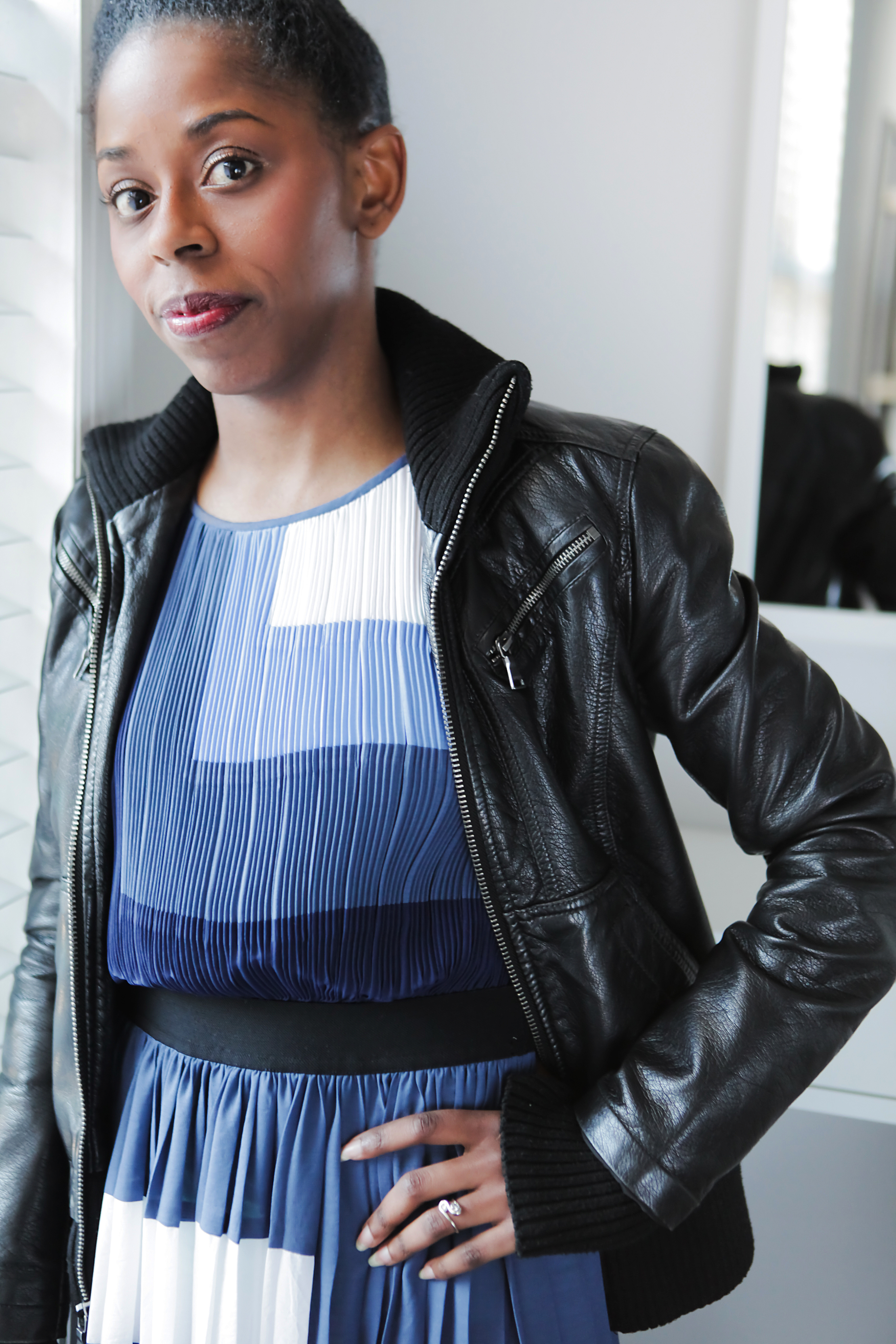
The dance world is still very white male dominated, like a lot of industries are. That sometimes means the biggest voice in the room gets the most attention. I’m not soft spoken but I’m also not naturally loud. I’m not particularly tall and I look younger than I am. That means some people think they can get over on me because they think I’m less serious than I am. So I have had to learn to flex to make myself heard clearly. It’s something I speak to students about, especially young women in the field, and it’s something I’ve taken very much to heart. You have to practice to assert yourself and build up your voice like any other muscle in your body. You’re not going to be invited to use your voice often so you need to be ready when the time comes.
If you weren’t involved in dance, what would you be doing?
If I was independently wealthy, I think I would sit on every arts board that would have me. I think board service, which I do a fair amount of already, is extremely important. Otherwise, I’ve always been interested in futurism, forecasting trends and human behavior, so I could see myself in that field.
What have you participated in over the past year that you’re most proud of?
The projects that I’ve been doing at Lake Placid out at John Brown’s farm have been really important to me. Most spaces I work in were not built with me in mind, but the farm was literally put aside for free black people to live in harmony without violence. There’s something uniquely unbelievable about being in a space that was created for you when so many spaces are not and where that original intent is still there 150 years later. Finding support from that community has been an absolute career highlight. Everything I’ve created as part of my partnership there is something that resonates deeply for me.
What do you hope is the experience of people who share that work with you?
I hope it creates greater empathy and curiosity. We can’t all be all things; we live in the bodies we’ve been given. But just the idea of finding truly different experiences apart from the vessel with which you are moving through the world, the notion of education toward serving the greater good, the temptation to angle privilege toward change… these are all powerful motivators. I’m not here to proselytize; I am fully confident in my own beliefs. I just want to show you a possible way.
John Brown was an abolitionist, one of the early allies of genuine freedom for all people, who was willing to risk everything. He lived by the strength of his convictions and offered a moral commitment to what was right in the name of people who looked nothing like him. I find him truly incredible and, even so, history has written him off as a madman. I’m not so sure. We’re hardly trying to start another Harpers Ferry but we do want to pose the question: what are you willing to offer? What part of what matters to you can you commit for the greater good?
What are you reading, watching and listening to that’s sustaining you at the moment?
For books, I’ve been reading Children of Blood and Bone, the first book of Tomi Adeyemi’s Legacy of Orïsha YA fantasy series and Janelle Monae’s debut story collection, The Memory Librarian, and Hampdon Sides’ Hellhound on His Trail, which documents the assassination of Dr. Martin Luther King Jr.
Music is tricky because I’m always listening with an ear toward creating dance. I have a tendency to fixate on work that I can translate into movement. Two performers that immediately come to mind are artists who have created music that I have already adapted: the German string ensemble Kaiser Quartett and EMERGE125’s resident sound designer, Erica “Twelve45” Blunt.
For movies, I’m not much different from the rest of the world in being excited about Black Panther: Wakanda Forever. I clearly remember the response when the first film released and there was that same energy when the new trailer dropped. There’s power in seeing that many black creators working together. Black culture is omnipresent – even when people pretend it’s not – but having this sort of a mythological touchpoint to pull it to the forefront of everyone’s vision is awesome and empowering.
What’s next for you?
I’ve been recently commissioned to create a piece of ballet dance theater by the Guggenheim’s Works & Process initiative. I’ll be presenting an excerpt of that production at City Center’s 2023 Dance Festival.
I’m incredibly proud of the work I just finished in choreographing The Classical Theatre of Harlem’s Twelfth Night, featuring several dancers from my company EMERGE125. The show was rapturously reviewed and there’s some talk of a possible transfer in the future, so keep an eye out for that!Lastly, EMERGE125 will be announcing our new NY season this fall for shows beginning in April. I would encourage your readers to visit our website and sign up at the bottom of the home page to our mailing list so we can let them know the moment we have a schedule to share.